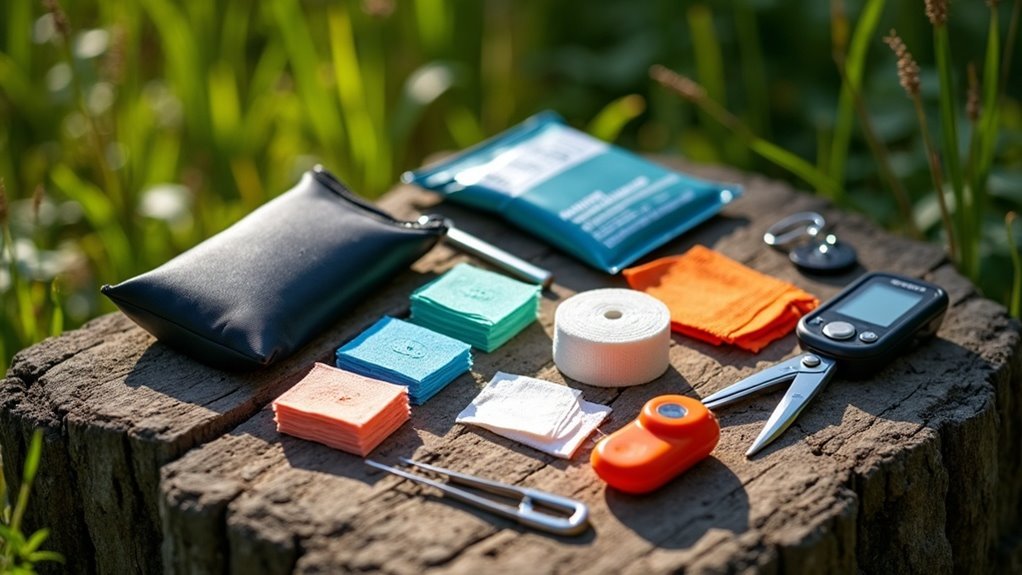
In a hiking kit, you should pack essential first aid items like adhesive bandages, sterile gauze pads, antiseptic wipes, and a topical antibiotic ointment for wound care. Don’t forget medications like ibuprofen and antihistamines, plus tools like tweezers, scissors, and a CPR mask. Moleskin for blisters and hydrocortisone cream for itching can be lifesavers too. Staying prepared can make all the difference in emergencies, and there’s more to reflect upon for your safety.
Key Takeaways
- Include essential medications like pain relievers and antihistamines for unexpected health issues during hikes.
- Stock various sizes of adhesive bandages and sterile gauze for treating cuts and abrasions.
- Pack antiseptic wipes and antibiotic ointment to clean and protect wounds from infection.
- Equip your kit with emergency response tools like a CPR mask, gloves, and tweezers for handling emergencies.
- Don’t forget blister treatment items such as moleskin and athletic tape to prevent discomfort while hiking.
Importance of a First Aid Kit
When you hit the trails, having a first aid kit is vital, as it can make a significant difference in handling injuries or emergencies. A well-stocked kit addresses common hiking injuries and guarantees you’re prepared for unexpected situations.
Tailor your kit to your health needs and the hiking conditions you’ll face. Familiarizing yourself with its contents and their uses is essential for effective responses. Regularly check and replace items like bandages and antiseptic wipes to keep your kit ready.
Consulting a medical professional can help you choose specific items based on personal health risks, enhancing your safety during outdoor adventures.
Basic Items for a First-Aid Kit
When packing your hiking first-aid kit, make sure to include essential medications like pain relievers and antihistamines for common issues.
You’ll also need wound care essentials such as adhesive bandages and sterile gauze to address cuts and abrasions swiftly.
Finally, don’t forget emergency response tools to help you handle unexpected situations effectively.
Essential Medications and Supplies
A well-rounded first aid kit for hiking should contain essential medications and supplies to handle common injuries and ailments.
Pack sealed, single-use ibuprofen for pain relief, antihistamines for allergies, and Imodium® for digestive issues.
For blistered feet, include moleskin and athletic tape to prevent and treat blisters effectively.
Adhesive bandages in various sizes, along with a small roll of sterile gauze, are vital for cuts.
Don’t forget a CPR mask for emergencies and latex or nitrile gloves for hygiene.
Antiseptic ointment and hydrocortisone cream will help with wound care and skin irritations during your backpacking trip.
Wound Care Essentials
To effectively manage wounds while hiking, include essential items in your first-aid kit that cater to a variety of injuries.
Stock various sizes of adhesive bandages to cover cuts and abrasions, protecting them from dirt and bacteria. Don’t forget sterile gauze pads and non-adherent dressings for larger wounds.
Antiseptic wipes are critical for cleaning injuries, while topical antibiotic ointment helps prevent infection.
Moleskin and athletic tape are perfect for blisters and injured joints. Finally, consider liquid bandages for sealing minor cuts, providing a waterproof barrier.
These wound care essentials will keep you and your fellow hikers safe.
Emergency Response Tools
Managing wounds is only one part of staying safe while hiking; you also need the right emergency response tools in your first-aid kit.
Include prescription medications in a labeled bag to address personal medical conditions. Stock up on single-use packs of over-the-counter meds like ibuprofen and antihistamines for common hiking ailments.
Adhesive bandages and sterile gauze are vital for treating cuts. A CPR mask is essential for emergencies, while latex or nitrile gloves help maintain hygiene.
Don’t forget tweezers for splinters and a small knife or scissors for cutting bandages or clothing when needed.
Stay prepared and keep others safe!
Critical Tools and Supplies
When you’re hiking, having the right critical tools and supplies can make all the difference in an emergency.
You’ll want essential items like a CPR mask, latex gloves, and tweezers to help manage injuries effectively.
Don’t forget a small knife or scissors for quick access to wounds, ensuring you’re prepared for any situation.
Essential First Aid Tools
Having a well-stocked first aid kit is essential for any hiking adventure. Among your essential first aid tools, include several pairs of nitrile gloves to maintain hygiene while treating injuries.
A CPR mask is crucial for emergency resuscitation, ensuring safety for both you and the victim. Don’t forget alcohol-based sanitizing gel to clean your hands and tools, minimizing contamination risks.
Tweezers are necessary for removing splinters and debris, promoting healing and preventing infection. Finally, a small knife or scissors can be invaluable for cutting bandages or clothing during emergencies.
These supplies to treat injuries can make all the difference in critical situations.
Protective Gear Components
Your first aid kit isn’t complete without protective gear components that help guarantee safety during emergencies.
These essentials guarantee you provide care without compromising your safety or that of others.
- Latex gloves: Multiple pairs protect you from blood and bodily fluids.
- Tweezers: Essential for removing splinters, ticks, and foreign objects safely.
- CPR mask: A barrier for safe mouth-to-mouth resuscitation.
Including these items in your kit not only enhances your readiness but also allows you to serve others effectively while minimizing risks.
Don’t overlook these critical tools for your hiking adventures!
Treatment and Relief Items
While hiking, it’s critical to be prepared for minor injuries and skin irritations, which is where treatment and relief items come into play.
Include antiseptic ointment in your kit to clean and protect wounds from infection. Hydrocortisone cream is essential for relieving itching and inflammation from insect bites and irritations.
Don’t forget liquid bandages for minor cuts, as they promote healing while allowing flexibility. A CPR mask is important for emergency resuscitation, ensuring safety during rescue breathing.
Finally, pack safety pins; they’re versatile for securing bandages or slings, making them an invaluable addition to your first aid supplies.
Hydration and Recovery
After addressing potential injuries, it’s important to focus on hydration and recovery during your hike. Staying hydrated is essential, as even mild dehydration can affect your performance and cognitive function.
Make sure to:
- Drink water regularly, ideally before feeling thirsty.
- Use electrolyte replacement powders to restore lost minerals.
- Consider homemade alternatives like mixing water with a pinch of salt and sugar.
Watch for signs of dehydration, such as excessive thirst and fatigue.
Training and Resources
To guarantee you’re prepared for emergencies while hiking, investing in training and resources is crucial.
Consider enrolling in a Wilderness First Aid course to gain essential skills for managing injuries in remote areas. The American Red Cross offers extensive training, including CPR and First Aid, making sure you’re ready for life-threatening situations.
Enroll in a Wilderness First Aid course to equip yourself with vital skills for handling injuries in remote locations.
For advanced knowledge, look into specialized classes like Mountaineering First Aid through organizations such as the Wilderness Medicine Training Center.
Additionally, keep a copy of the Wilderness Medical Handbook for ongoing learning.
Don’t forget to regularly check your prepackaged first aid kits to confirm they’re stocked and up-to-date.