For sustained energy during hiking, focus on complex carbohydrates found in whole grains, fruits, and vegetables. Foods like oatmeal, quinoa, and sweet potatoes metabolize slowly, helping you avoid fatigue. Dried fruits, such as apricots and figs, are also great options, providing essential carbs with minimal added sugars. Don’t forget to balance your intake with healthy fats and stay hydrated to maximize performance. There are more ways to fuel your hiking adventures effectively.
Key Takeaways
- Whole grains like oats and quinoa provide complex carbohydrates for long-lasting energy during hikes.
- Fruits and vegetables offer essential nutrients and fiber, supporting sustained energy levels.
- Dried fruits, such as apricots and figs, supply complex carbs with minimal added sugars for quick energy.
- Nuts and seeds deliver healthy fats and protein, enhancing energy management and satiety.
- Energy bars made with whole ingredients balance complex and simple carbohydrates for effective fueling on the trail.
Understanding the Role of Carbohydrates in Hiking Energy
When you’re hiking, your body relies heavily on carbohydrates as its primary energy source, making it vital to understand their role in sustaining your stamina.
Complex carbohydrates, like whole grains, fruits, and nuts, provide sustained energy, helping you avoid fatigue. Consuming these foods before, during, and after hikes keeps your glycogen stores replenished.
Aim for around 30g of carbohydrates every 60-90 minutes, and larger meals of 60-90g for longer treks. Staying hydrated is essential, too, as it enhances nutrient absorption and overall performance.
Balancing carbohydrates with protein guarantees your energy levels remain stable throughout your hiking adventure.
Quick Energy Sources: The Importance of Simple Carbohydrates
Although hiking demands sustained energy primarily from complex carbohydrates, simple carbohydrates play an essential role in providing quick energy boosts when your glycogen stores run low.
Foods like fruit, honey, and energy gels are ideal hiking food for preventing fatigue and avoiding “hitting the wall.” These quick energy sources can rapidly elevate your energy levels, especially during challenging stretches.
However, it’s vital to limit added sugars to 6-10% of your total daily calories, using simple carbs strategically. Balancing these quick energy options with complex carbohydrates guarantees you maintain sustained energy throughout your hike for peak performance.
Sustained Energy Sources: The Benefits of Complex Carbohydrates
While quick energy sources like simple carbohydrates can provide a much-needed boost during a hike, complex carbohydrates are the foundation for sustained energy that keeps you moving over longer distances.
Foods rich in complex carbs, like whole grains, fruits, and vegetables, metabolize slowly, stabilizing blood sugar levels. Incorporating oatmeal, quinoa, and sweet potatoes into your meals supports energy management and replenishes glycogen stores essential for endurance.
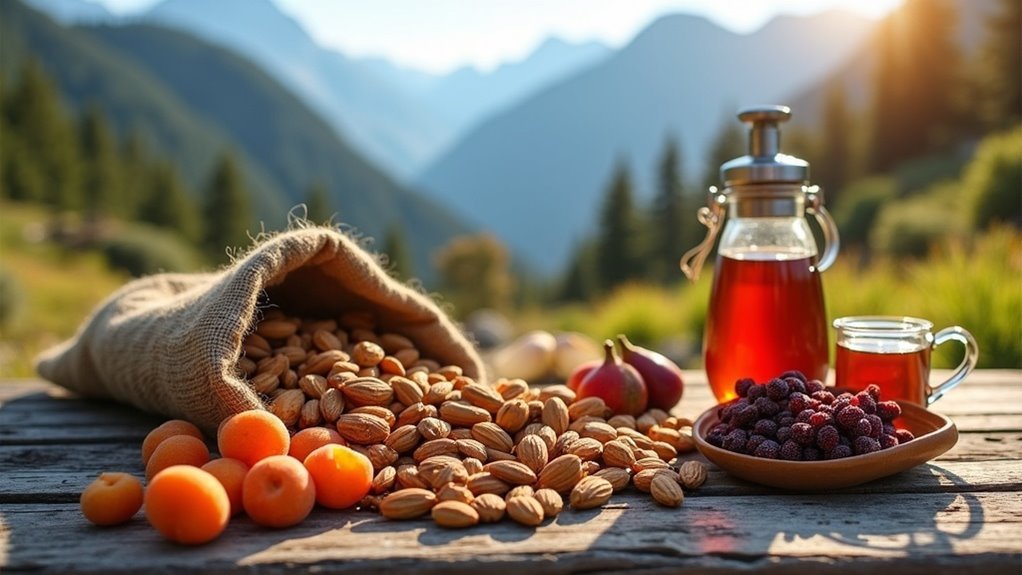
Dried fruits, such as apricots and figs, make convenient high-energy snacks that offer complex carbohydrates with minimal added sugars.
Prioritizing complex carbs guarantees you won’t hit the wall on your next hiking adventure.
The Impact of Glycemic Index on Hiking Performance
How can understanding the glycemic index (GI) of your food choices enhance your hiking performance?
Choosing low GI foods, like whole grains and legumes, helps maintain sustained energy levels during your hike, supporting endurance and preventing energy crashes.
While high GI foods can provide quick energy boosts, they may lead to rapid spikes and drops in blood sugar, compromising your performance.
For ideal energy sources, incorporate low GI options regularly into your hiking diet.
This approach not only stabilizes your energy levels but also guarantees you’re well-prepared for longer, more strenuous hikes, allowing you to focus on enjoying the trail.
Balancing Nutrients for Optimal Energy on the Trail
Understanding the glycemic index of your food choices sets the stage for optimizing your nutrient balance on the trail.
Focus on a mix of carbs and fats to fuel your hike effectively. Incorporate whole grains, fruits, and nuts into your meal plans for sustained energy.
Snacks like energy bars and trail mix, enriched with protein and healthy fats, help stabilize energy levels. When you need a quick boost, opt for dried fruits or energy gels.
Remember, staying hydrated is essential during long hikes, ensuring you maintain performance and enjoy the journey.
Balance is key for an energizing trail experience.