
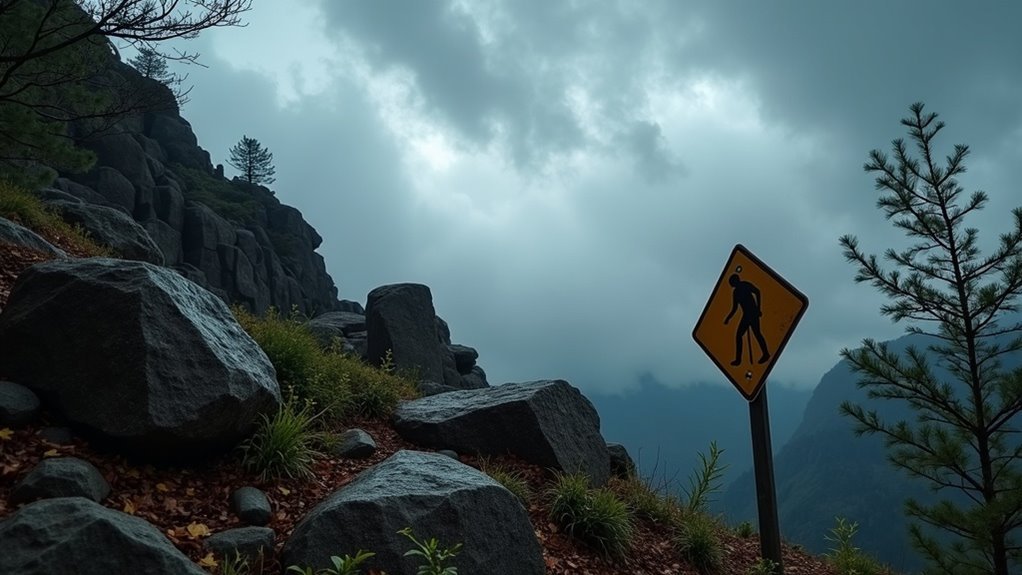
When hiking, watch for darkening skies and vertical clouds, which signal possible storms. A sharp drop in temperature and a sudden quietness—like the disappearance of insects—can indicate danger. Roaring sounds from rising streams may mean flash floods. Be wary of strong winds, especially if they shift direction, as they can foreshadow bad weather. Always be prepared for sudden changes. Want to know more about staying safe on the trails? There’s plenty more to discover!
Key Takeaways
- Darkening skies and vertical cumulus clouds may indicate thunderstorms approaching within 30 minutes, signaling unsafe hiking conditions.
- Sudden temperature drops and cooling winds can suggest danger, requiring immediate reassessment of hiking plans.
- The disappearance of insects like bees and butterflies indicates shifting air pressure, a warning of changing weather conditions.
- Roaring water sounds or rapid rises in streams may signal imminent flash floods, particularly in steep terrains or desert canyons.
- Sustained winds above 20 mph can create hazardous conditions, signaling the need to reconsider outdoor activities.
Signs of Severe Storms
Have you ever noticed how quickly the weather can change while you’re hiking? Recognizing the signs of severe storms is essential for your safety.
Darkening skies and the appearance of vertical cumulus clouds can indicate rapidly changing weather, sometimes developing a thunderstorm within 30 minutes. A sudden drop in temperature and cooling winds often signal danger ahead, so stay alert.
Additionally, if insects like bees and butterflies suddenly disappear, it’s a natural warning sign of shifting air pressure.
Indicators of Flash Floods
As you stay vigilant for signs of severe storms, it’s equally important to recognize indicators of flash floods.
Watch for darkening skies, which often signal an approaching storm capable of releasing heavy rain. Listen for the sound of roaring water or observe rapid rises in streams or riverbeds. These signs can mean flash floods are imminent, especially in steep terrains or desert canyons.
Be alert for darkening skies and roaring water; these can signal imminent flash floods, especially in steep or canyon areas.
Keep an eye on sudden changes in weather patterns, like temperature drops or increasing wind speed, as they may indicate worsening conditions.
Always check local weather conditions and heed flash flood warnings while hiking. Stay safe!
Risks of Hypothermia
When hiking in unpredictable weather, it’s crucial to understand the risks of hypothermia, which can strike even in temperatures above freezing.
Wet weather, combined with wind chill, accelerates heat loss, lowering your body temperature dangerously.
Be aware of these symptoms:
- Shivering
- Confusion
- Slurred speech
- Fatigue
To prevent hypothermia, wear synthetic layers that retain heat when wet, avoid cotton clothing, and stay hydrated.
If conditions worsen, seek shelter immediately.
Recognizing these signs and taking preventive measures can help you stay safe and protect others on the trail from the dangers of hypothermia and heat exhaustion.
Heat-Related Illnesses
When hiking in hot and humid conditions, you need to be aware of heat-related illnesses that can strike unexpectedly.
Symptoms like heavy sweating, cold skin, and altered facial color signal that your body is struggling to cool down.
Staying properly hydrated and recognizing the warning signs is essential for your safety on the trail.
Symptoms of Heat Illness
Recognizing the symptoms of heat illness is essential for any hiker, especially in challenging conditions.
Be aware of the following signs to guarantee your safety:
- Heat cramps: Painful muscle spasms indicating the need for hydration and rest.
- Heat exhaustion: Heavy sweating, cold skin, or changes in facial color, requiring immediate cooling measures.
- Heat stroke: A severe condition with dangerously high body temperatures needing urgent medical attention.
- Other symptoms: Dizziness, nausea, and rapid pulse that signal a breakdown in your body’s heat regulation.
Staying hydrated and vigilant can help you prevent these serious heat-related illnesses.
Prevention Strategies for Heat
To prevent heat-related illnesses while hiking, you should prioritize hydration and timing. Aim to drink at least three quarts of water on hot days, monitoring your hydration levels through urine color.
Schedule hikes for early morning or late evening to dodge peak temperatures, and always check the weather forecast for the heat index.
Replenish lost minerals with salty snacks or sports drinks during strenuous activities.
Recognize signs of heat illness, like heavy sweating or confusion, to act quickly.
Hydration Importance During Hiking
Staying properly hydrated during hikes is essential, especially in hot and humid conditions where fluid loss can be significant.
Dehydration increases the risk of heat-related illnesses, so you’ll want to keep these tips in mind:
- Start hikes well-hydrated and carry at least three quarts of water.
- Consume electrolytes through salty snacks or sports drinks.
- Monitor your urine output; darker urine indicates dehydration.
- Recognize symptoms like heavy sweating, cold skin, or muscle cramps.
Monitoring Wind Conditions
When you’re out on the trail, keeping an eye on wind conditions is essential for your safety.
Pay attention to the wind direction, as shifts can signal changes in the weather, especially if gusts suddenly pick up.
Wind Direction Indicators
Monitoring wind conditions is essential for hikers, as shifts in wind direction can signal upcoming weather changes that may impact safety on the trail.
Keep an eye on wind direction to stay informed about:
- Northeast to east winds often indicate pleasant weather.
- South-west winds suggest a low-pressure system, bringing storms.
- Prolonged north or east winds can mean cooler temperatures and rain or snow.
- Strong winds from the south may signal warm air and potential thunderstorms.
Always check the weather and consider guidance from the National Weather Service to guarantee a safe and enjoyable hiking experience.
Wind Speed Monitoring
Wind speed plays a significant role in hiking safety, particularly in exposed areas. Sustained winds above 20 mph can create hazardous conditions, while gusts over 30 mph may increase your risk of falls and make it tough to control gear.
To stay safe, monitor wind speed and direction closely. Use a portable anemometer for real-time data, allowing you to make informed decisions about your hike.
Additionally, keep an eye on weather forecasts; consistent winds suggest stable weather, but sudden shifts may signal approaching storms. Being aware of these factors can greatly enhance your hiking experience and guarantee everyone’s safety.
Sudden Wind Changes
Although you might be enjoying a calm hike, sudden changes in wind direction can quickly signal that conditions are about to shift.
Keep an eye out for:
- Sudden shifts from northeast to southwest, indicating a possible storm.
- Increases in wind speed, especially gusts over 20 mph, suggesting severe weather.
- Accompanying temperature drops, often preceding inclement conditions.
- Local wind patterns that can enhance predictive accuracy for unstable weather.
Utilizing Barometers and Altimeters
When you’re hiking, keeping an eye on weather changes can be essential for your safety, and utilizing barometers and altimeters can greatly enhance your experience.
Barometers measure air pressure changes, with sharp drops indicating bad weather, often signaling severe storms. A drop of 1-2 hPa per hour can suggest imminent severe weather, so monitor it closely.
Altimeters, which also track air pressure, help you determine elevation and understand weather patterns that may shift with altitude.
Preparing for Sudden Weather Changes
As you venture into the great outdoors, being prepared for sudden weather changes is essential for your safety and enjoyment.
To effectively navigate unpredictable conditions, pay attention to these signs:
- Sudden shifts in wind direction, especially from the south or southwest
- Darkening skies and vertical cumulus clouds indicating potential thunderstorms
- A significant drop in air pressure, signaling severe weather
- The sudden disappearance of insects, hinting at increasing humidity
Regularly monitor weather forecasts using reliable sources to stay informed and adjust your plans accordingly.
Being proactive can make all the difference in ensuring a safe hiking experience.