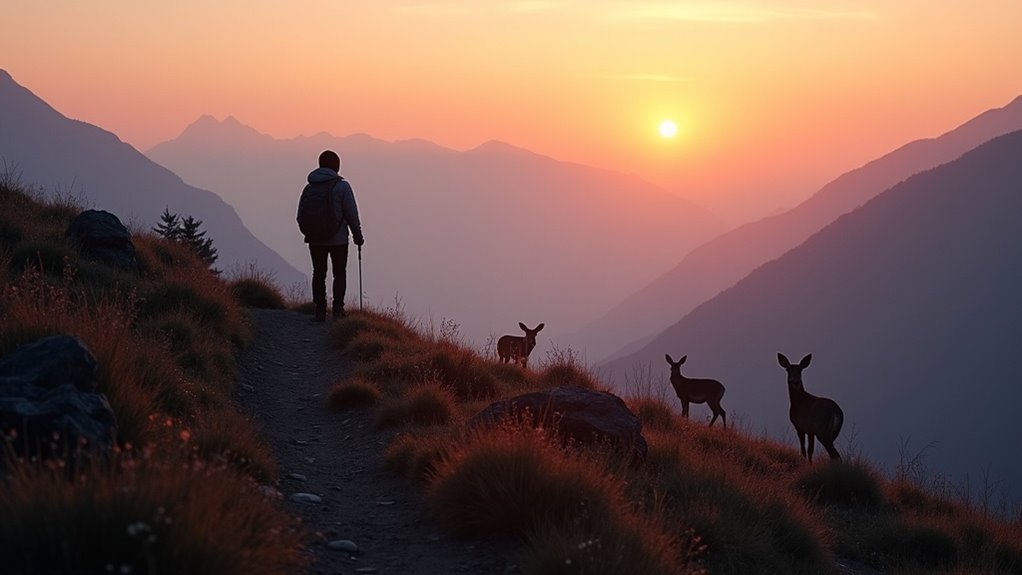
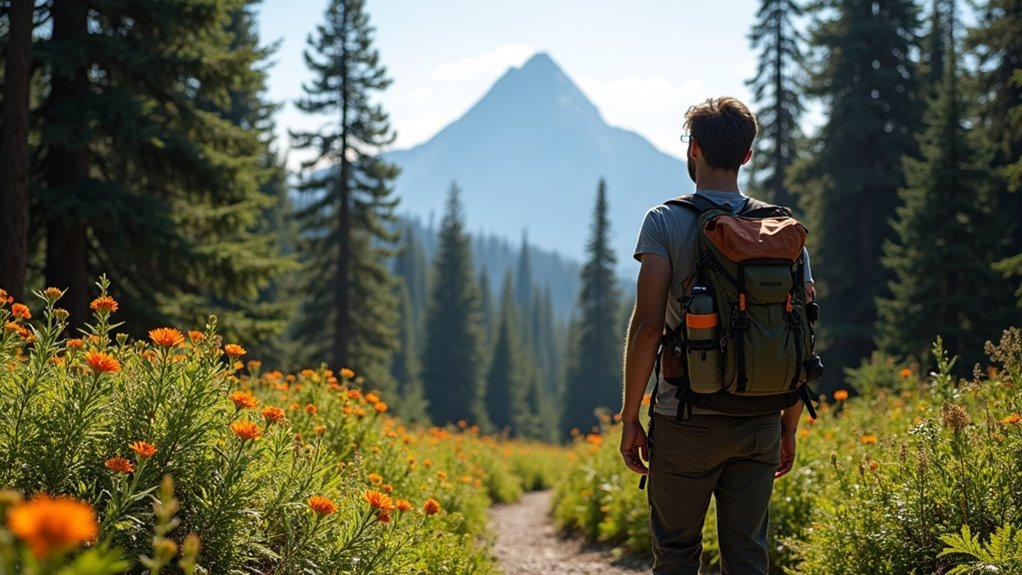
When hiking in bear country, keep a safe distance of at least 100 feet from bears and hike in groups of four or more. Make noise to alert bears and use bear-proof containers for food storage. If you encounter a bear, use calm communication and back away slowly without direct eye contact. Carry bear spray and know how to use it effectively. By following these guidelines, you can enhance your safety and guarantee a more enjoyable outdoor experience.
Key Takeaways
- Hike in groups of four or more to deter bears and enhance safety for all, especially children.
- Make noise while hiking to alert bears of your presence and reduce surprise encounters.
- Maintain a safe distance of at least 100 feet from bears and avoid direct eye contact.
- Carry bear spray and keep it easily accessible for quick deployment if necessary.
- Store food and scented items in bear-proof containers, keeping them at least 200 feet from your campsite.
Know the Bear
Understanding the characteristics and behaviors of bears is essential for safe hiking in bear country.
Black bears, commonly found in lower-48 states, usually display a flight response to human contact. However, curiosity can lead to close encounters, especially if bears are conditioned to human presence through easy food sources.
Maintaining a personal space of approximately 100 feet is critical to avoid startling them, which can escalate to bear attacks. Mother bears with cubs are particularly defensive, so always respect their space.
Proper food storage in bear-proof containers helps minimize human contact, ultimately fostering a safer environment for both bears and hikers.
Hiking With Bears
When hiking in bear country, it’s essential to take proactive measures to guarantee your safety and the well-being of the bears.
Check with park rangers about current bear activity and recommendations. Make noise—talk in a soothing voice, sing, or use bear bells—to alert bears of your presence. Hike in groups of four or more to deter bears and keep children safe.
Stay alert for bear signs like fresh tracks or droppings, and adjust your behavior accordingly. Always store food or your backpack in bear-proof containers and avoid messy sites that may attract bears.
Your awareness contributes to a safer environment.
Encountering a Bear
When encountering a bear, maintaining a safe distance is essential for your safety.
Use calm communication techniques to signal your presence, as this can help reduce the bear’s perceived threat.
Assess the bear’s behavior carefully; knowing how to react can make a significant difference in the encounter’s outcome.
Maintain Safe Distance
To guarantee your safety while hiking in bear country, maintaining a safe distance from bears is essential. Always keep at least 100 feet away to avoid being perceived as a threat and to provide the bear with space to move.
If a bear is unaware of your presence, quietly back away without drawing attention to minimize encounters. If a bear notices you, use a soothing voice while slowly backing away; this helps prevent startling it.
Never approach a bear for photos, as this can provoke defensive behavior. Always be ready to use bear spray if the bear approaches within 20-30 feet.
Calm Communication Techniques
Encounters with bears can be unnerving, so employing calm communication techniques is essential for your safety. Speak soothingly to signal your presence, helping to avoid startling the bear.
Maintain a distance of at least 100 feet to prevent being perceived as a threat. If the bear is unaware of you, quietly back away without drawing attention.
Should the bear notice you, continue to use a gentle voice while slowly backing away, remaining non-threatening. Avoid direct eye contact, as this may challenge the bear.
Practicing bear awareness and utilizing these techniques can foster a peaceful resolution during encounters.
Bear Behavior Assessment
Understanding bear behavior is essential for your safety in bear country, as different situations call for distinct responses.
When you encounter a bear, maintain a distance of at least 100 feet to avoid being perceived as a threat. If the bear is unaware, quietly back away. If it knows you’re there, use a calming voice while slowly retreating.
For a defensive bear, remain calm and appear non-threatening. In contrast, a non-defensive bear may require you to shout to intimidate.
Always leave a clear escape route for the bear and avoid cornering it, as this can provoke aggressive behavior.
Bear Spray Is a Must
Carrying bear spray is crucial when hiking in bear country, as it serves as the most effective deterrent against potential encounters.
Keep it in an easily accessible location and familiarize yourself with the manufacturer’s instructions to guarantee you can deploy it quickly in an emergency.
Use bear spray when a bear is within 20-30 feet, aiming below its face to maximize effectiveness while avoiding downwind situations.
Regularly check the shelf life to confirm potency.
Camping With Bears
When camping in bear country, effective food storage techniques are essential to keeping bears at bay.
You should choose campsite locations wisely, ensuring they’re away from dense vegetation and natural food sources.
Additionally, bear-proofing your gear, including using canisters and properly hanging food, further minimizes the risk of unwanted bear encounters.
Food Storage Techniques
Effective food storage is essential for camping in bear country to minimize the risk of unwanted encounters.
Utilize bear canisters, like the BV450 or BV500, for maximum protection against bears. Always store food and scented items at least 200 feet away from your campsite, ensuring cooking areas are downwind to reduce odors.
In areas with fewer bear sightings, consider using smell-proof bags and hanging food from trees at least 10 feet high.
Promptly conduct cleanup after meals, as immediate action decreases the chance of attracting bears. Dispose of waste water downwind and 100 feet from sleeping areas to further limit odors.
Campsite Location Strategies
Selecting the right campsite is just as important as proper food storage when hiking in bear country. Aim for a site at least 200 feet from trails and water sources to minimize encounters. Set your cooking area downwind from your tent to keep food odors away. Use bear boxes or bear-proof containers for food storage, especially in active bear territories. Avoid dense vegetation and natural food sources that attract bears. Clean up immediately after meals, disposing of scraps in bear-proof containers.
| Strategy | Description |
|---|---|
| Distance from Water | At least 200 feet to minimize bear encounters |
| Cooking Area Location | Downwind from the tent to reduce food scents |
| Food Storage Method | Utilize bear-proof containers or bear boxes |
| Vegetation Consideration | Avoid dense areas that attract bears |
Bear-Proofing Your Gear
To guarantee your safety while camping in bear country, bear-proofing your gear is essential.
Use bear canisters like the BV450 or BV500 for ideal food storage and to deter bear encounters. Store food and scented items at least 200 feet from your tent, ideally downwind.
In lower-risk areas, utilize sealed plastic bags, but keep them secured and out of sight. Clean dishes immediately to eliminate food odors, and dispose of wastewater at least 100 feet from your site.
Always make certain food and toiletries are sealed in bear-proof containers, hung at least 10 feet off the ground, and 4 feet from trees.
Food Storage and Campsite Safety
When hiking in bear country, proper food storage and campsite safety are essential for minimizing bear encounters.
Use bear-proof containers to store food and scented items, placing them at least 200 feet from your tent and downwind. After cooking, wash dishes promptly to eliminate cooking odors.
In areas with low bear activity, opt for sealed plastic bags and hang food at least 10 feet off the ground.
Choose campsites away from dense vegetation and natural food sources.
Always pack out garbage in sealed bags and dispose of waste water downwind, at least 100 feet from sleeping areas, to prevent attracting bears.
Observing and Protecting Bears
Observing bears in their natural habitat can be a thrilling experience, but it’s crucial to prioritize safety for both you and the bears. Keep at least 100 meters away while observing to minimize interactions that could lead to habituation.
Never feed bears or leave food unattended; this encourages them to associate humans with food, increasing risks. Use bear-proof containers for waste disposal to prevent attracting bears.
Familiarize yourself with wildlife signs like tracks and claw marks to understand their presence. When photographing, do so from your vehicle to avoid stressing the animal and creating road hazards.
Prioritize safety and respect their space.
General Awareness and Expert Guidance
Bear encounters can be unpredictable, making it essential to stay informed and prepared while hiking in bear country. Always check with local wildlife agencies for current bear activity and safety recommendations.
Familiarize yourself with bear behavior and signs, such as tracks and scat, to enhance your awareness. To minimize risk, travel in groups of four or more; larger groups create noise that alerts bears.
Use bear-proof containers for food storage, ensuring all scented items are secured away from your campsite. By following these precautions, you can greatly reduce the likelihood of a bear encounter during your outdoor adventures.