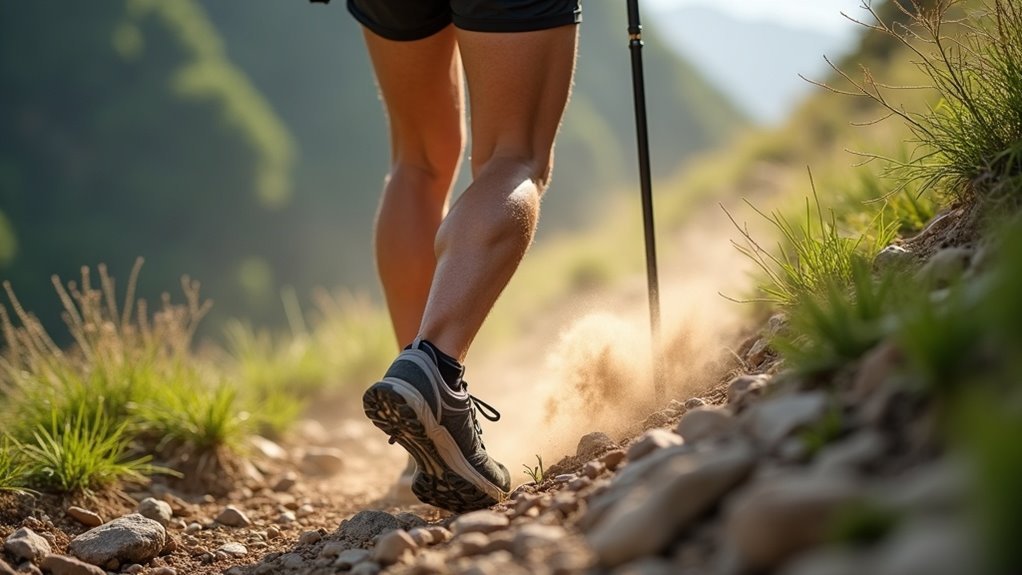
To condition your knees for steep hiking descents, focus on strengthening exercises like forward lunges, squats, and Poliquin step downs to enhance stability and prepare your quadriceps for eccentric contractions. Incorporating controlled step downs can also boost your functionality. Pay attention to your footwear, as well-fitted hiking boots and cushioned insoles play a key role in knee health. By gradually increasing intensity in your training, you can better protect your knees and improve performance on challenging trails. More insights await.
Key Takeaways
- Strength training exercises like squats and lunges enhance knee stability and support during steep descents.
- Eccentric contractions through controlled step downs help strengthen quadriceps for better descent control.
- Incorporate Poliquin step downs to mimic downhill angles and improve stability.
- Use proper footwear with adequate ankle support and cushioning to minimize knee impact.
- Gradually increase hiking intensity by 10% weekly to prevent overuse injuries and support knee health.
The Importance of Knee Health for Hikers
Knee health is vital for hikers, especially when maneuvering steep descents. Strong knees provide stability and balance, greatly reducing your risk of injury.
During downhill hiking, your quadriceps engage in eccentric contraction, demanding more strength and control. To prevent knee pain and discomfort, it’s important to incorporate strength training exercises like lunges and squats. These movements build strength and support your knee stability.
Regular assessments of your knee strength and flexibility, combined with proper warm-up routines, can enhance endurance and performance. Prioritizing knee health guarantees better alignment and function, allowing you to enjoy hiking without the worry of injury.
Understanding Eccentric Contraction During Descents
When you’re hiking downhill, your quadriceps engage in eccentric contraction, which helps control your descent and protect your knees.
This type of muscle function requires more strength than concentric contractions and is essential for injury prevention.
Eccentric Muscle Function Explained
As you navigate steep downhill trails, your muscles engage in eccentric contractions, which are essential for controlling movement and stabilizing your joints.
Eccentric strength is vital for managing the forces your body experiences during downhill hiking, particularly in the quadriceps, which help maintain knee stability.
Without adequate training, these contractions can lead to knee injuries like patellar tendonitis.
To enhance your eccentric function, incorporate exercises such as controlled step downs and lunges into your routine.
Impact on Knee Health
Understanding the role of eccentric contractions in hiking is essential for maintaining knee health during steep descents. These contractions help control your descent but can lead to knee pain if your muscles aren’t properly conditioned.
- Eccentric contractions generate more stress on the knees, increasing injury risk.
- Weakness in surrounding areas, like hips and ankles, can exacerbate knee pain.
- Targeted strengthening exercises, such as the Poliquin Step Down and forward lunges, prepare your knees for downhill demands.
Prioritizing these aspects can greatly reduce the risk of conditions like patellar tendonitis while enhancing your overall hiking experience.
Training for Eccentric Strength
While many hikers focus on stamina for uphill climbs, it’s the eccentric strength that plays an essential role in safely traversing steep descents.
Eccentric contraction allows your quadriceps to lengthen under tension, controlling your descent and preventing knee injuries. During downhill hiking, these contractions are critical; without sufficient eccentric strength, you risk knee pain and conditions like patellar tendonitis.
To build this strength, incorporate exercises like the Poliquin Step Down and controlled forward lunges into your training regimen.
A well-rounded strength program emphasizing eccentric exercises can enhance stability and markedly reduce the risk of knee injuries during challenging declines.
Recommended Strengthening Exercises for Hiking
To prepare for hiking descents, you need to incorporate specific strengthening exercises that target your legs, such as the Poliquin Step Down and controlled forward lunges.
These movements enhance stability and strength in your quadriceps, hamstrings, and glutes, which are essential for managing steep slopes.
Additionally, integrating mobility and flexibility work into your routine can further support your knees and improve overall hiking performance.
Essential Leg Strengthening Exercises
As you prepare for hiking descents, incorporating essential leg strengthening exercises into your routine can greatly enhance your stability and performance on the trail.
Focus on exercises that build strength and protect your knees:
- Poliquin Step Down: Mimics downhill angles, improving stability.
- Forward Lunges: Enhance stability and flexibility with controlled descents.
- Squats: Build overall leg strength, vital for knee support.
Key Mobility and Flexibility
Incorporating key mobility and flexibility exercises into your training regimen can markedly improve your performance during hiking descents. Focus on dynamic stretches to enhance flexibility and prepare muscles and joints. Essential exercises include squats and lunges for strength, particularly the Poliquin Step Down for stability. Forward lunges, executed with controlled descent, also reduce knee strain. Strengthening your glutes and hips through bridges and clamshells supports knee alignment.
| Exercise | Benefits |
|---|---|
| Dynamic Stretches | Enhances flexibility |
| Squats | Strengthens quadriceps & hamstrings |
| Poliquin Step Down | Improves leg stability |
| Forward Lunges | Increases stability & flexibility |
| Bridges & Clamshells | Supports overall knee health |
Techniques to Manage Knee Pain While Hiking
When hiking downhill, managing knee pain is essential for maintaining your enjoyment and safety on the trail. To alleviate strain and support your knees during descents, consider these techniques:
Managing knee pain while hiking downhill is crucial for your safety and enjoyment. Consider techniques to support your knees during descents.
- Take shorter steps to reduce the impact on your knees and alleviate pain from conditions like patellar tendonitis.
- Maintain a slower pace for better muscle engagement, allowing your quadriceps to stabilize the knee effectively.
- Use trekking poles to offload stress from your joints, enhancing stability.
If pain persists, consult a physical therapist for tailored strategies to continue enjoying your hikes without exacerbating your condition.
The Role of Proper Footwear and Equipment
Proper footwear and equipment play an essential role in ensuring a safe and enjoyable hiking experience, especially during steep descents.
Investing in well-fitting hiking boots with ankle support and cushioned insoles can prevent blisters and discomfort that affect knee health. Durable outsoles with good traction minimize slips, while orthotic inserts offer additional arch support, reducing stress on your knees.
Using trekking poles effectively offloads stress from your knee joints, enhancing balance and control on downhill trails.
For those with existing knee pain, compression knee braces provide stability without indicating weakness, making them particularly beneficial during steep descents.
Tips for Effective Warm-Up and Stretching
To guarantee your body is ready for the challenges of steep hiking descents, a well-structured warm-up and stretching routine is essential. Start with 5-10 minutes of light cardio to boost blood flow. Incorporate dynamic stretches, such as leg swings and high knees, to activate key muscle groups.
Post-activity, focus on these stretches for ideal knee health:
- Quadriceps and hamstrings
- Calves and hips
- Foam rolling for IT band and glutes
Regularly performing these exercises enhances muscle coordination and stability, reducing the risk of knee pain during descents.
Prioritize this routine to support your well-being on the trail.
Strategies for Gradual Intensity Increase in Training
A solid warm-up and stretching routine sets the foundation for safe and effective hiking, but it’s just as important to gradually increase the intensity of your training to build resilience.
Start with easier trails and shorter distances, allowing your knees to adapt before tackling steeper hikes. Follow a structured plan, increasing mileage or elevation gain by 10% weekly to reduce pain and prevent overuse injuries.
Incorporate strength, balance, and mobility exercises to prepare your knees. Listen to your body, taking necessary rest days, and consider cross-training activities like cycling or swimming to build endurance without stressing your joints.