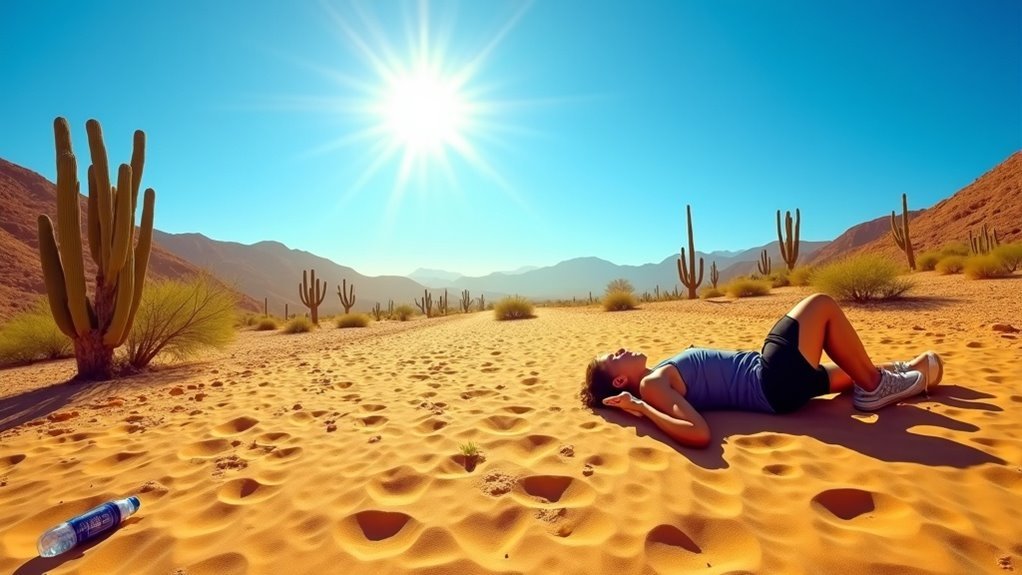
Heat exhaustion is a significant risk during desert hiking due to extreme temperatures, dehydration, and prolonged exposure to the sun. Symptoms like heavy sweating, dizziness, and muscle cramps can escalate quickly if not addressed. Factors like the time of day you hike, your fitness level, and hydration practices play a role in your risk. Staying cool, taking breaks, and drinking enough fluids can help you manage your safety in these environments. Learn more about preventing and treating heat-related illnesses.
Key Takeaways
- High temperatures, especially in inner canyons, can increase the risk of heat exhaustion during desert hiking.
- Dehydration can occur rapidly due to low water availability and high sweat evaporation in dry climates.
- Peak hiking hours between 10 am and 4 pm significantly elevate heat stress and exhaustion risks.
- Individuals with pre-existing health conditions, young children, and the elderly are more vulnerable to heat exhaustion.
- Regular hydration, appropriate clothing, and scheduled breaks in shaded areas are essential preventive measures.
Understanding Heat Exhaustion and Its Symptoms
When you’re hiking in the desert, it’s essential to understand heat exhaustion and its symptoms, as the risk can quickly escalate in such extreme conditions.
Heat exhaustion occurs from excessive heat exposure and dehydration. Watch for signs like heavy sweating, weakness, dizziness, and nausea.
Dark-colored urine, fainting, confusion, and muscle cramps indicate your body struggles to cool down. These symptoms signal the onset of heat-related illnesses, demanding immediate action.
Rest in a shaded area, hydrate with cool water, and apply cold packs to your body. If untreated, heat exhaustion can progress to heat stroke, which requires urgent medical attention.
Causes of Heat Exhaustion in Desert Environments
Heat exhaustion in desert environments stems primarily from prolonged exposure to extreme temperatures and inadequate hydration. The dry climate accelerates sweat evaporation, diminishing your body’s cooling ability. Inadequate water intake, coupled with physical exertion during peak heat hours, greatly raises your risk of heat-related illnesses.
| Factor | Description | Impact on Heat Exhaustion |
|---|---|---|
| High Temperatures | Up to 20°F hotter in inner canyons | Overheating |
| Dry Climate | Accelerates sweat loss | Increases dehydration |
| Limited Water Sources | Scarcity of hydration options | Causes inadequate intake |
| Peak Activity Hours | 10 am to 4 pm | Heightens heat stress |
Individual Factors Influencing Heat Exhaustion Risk
Understanding individual factors influencing heat exhaustion risk is essential for anyone planning a desert hike. Your level of individual acclimatization to heat is vital; if you’re accustomed to high temperatures, you’ll manage heat stress better.
Pre-existing health conditions, like cardiovascular issues, heighten your risk, so be cautious. Fitness levels also matter—better fitness means improved temperature regulation. Age plays a role too; young children and the elderly are more vulnerable.
Finally, remember that hydration needs vary; your body size, metabolic rate, and sweat rate dictate how much water you require to stay safe and avoid dehydration while hiking.
Importance of Hydration During Desert Hiking
Staying hydrated during desert hiking is crucial to prevent dehydration, especially since you may not notice fluid loss right away.
It’s important to drink water regularly, even if you don’t feel thirsty, and aim for about half a liter per hour.
Monitoring your urine color can help you gauge your hydration status, ensuring you stay safe and energized on the trail.
Dehydration Risks Explained
When hiking in the desert, knowing the risks of dehydration is essential for your safety and enjoyment. In hot weather, your body loses fluids quickly, often before you notice any visible signs of sweating. This can lead to significant fluid loss, so aim to drink at least half a liter of water per hour.
Hydration Strategies for Safety
Proper hydration is key to enjoying a safe hiking experience in the desert. To effectively implement hydration strategies, drink half a liter of water per hour, and pack extra water for hotter conditions.
Prehydrate before hitting the trail and sip small amounts regularly instead of waiting for thirst to strike. Consider incorporating electrolyte-enhanced drinks to aid recovery and combat heat exhaustion.
Additionally, monitor your urine color; clear urine indicates good hydration, while darker shades signal the need for more fluids.
Preventative Measures for Avoiding Heat Exhaustion
To avoid heat exhaustion during your desert hike, focus on hydration strategies and appropriate clothing.
Prehydrate before you set out, and keep sipping water throughout your trek to maintain hydration.
Choose lightweight, light-colored clothing and a wide-brimmed hat to help regulate your body temperature and protect yourself from the sun.
Hydration Strategies
Staying hydrated is essential for preventing heat exhaustion during desert hikes, especially in extreme temperatures.
To implement effective hydration strategies, prehydrate by drinking water regularly, aiming for at least half a liter per hour in hot conditions.
Monitor your urine color—clear indicates good hydration, while darker urine signals the need for more fluids.
Pair water with electrolyte-enhanced drinks or salty snacks to replenish lost salts and avoid heat stroke.
Always carry extra water and consider hiking during cooler parts of the day, such as early morning or late afternoon, to minimize heat exposure and enhance your hiking experience.
Clothing and Gear
While you’re gearing up for a desert hike, choosing the right clothing and gear can make a significant difference in preventing heat exhaustion. Opt for light-colored, loose-fitting, moisture-wicking clothing to help regulate your body temperature. A wide-brimmed hat shields you from the sun, while UPF-rated clothing protects your skin from UV rays. Don’t forget a hydration bladder with at least 3 liters of water to stay hydrated. Incorporate cooling accessories like wet bandanas for extra relief.
| Clothing Type | Benefits | Gear Recommendations |
|---|---|---|
| Moisture-wicking | Facilitates cooling | Lightweight hydration bladder |
| Loose-fitting | Enhances airflow | Wide-brimmed hat |
| UPF-rated | Shields from UV rays | Cooling towels |
| Light-colored | Reflects sunlight | Wet bandanas |
| Breathable fabrics | Improves comfort | Insulated water bottles |
Treatment Options for Heat Exhaustion
When you experience heat exhaustion, immediate action is essential to prevent further complications.
First, find a shaded or air-conditioned area to rest and begin rehydrating with cool water. This helps lower your body temperature.
You can also immerse yourself in cold water or spray your body with cool water for effective relief.
Consider electrolyte-enhanced sports drinks like Pedialyte to replenish lost salts and fluids.
If symptoms persist beyond an hour, seek medical treatment, which may include intravenous fluids and aggressive cooling methods.
Monitor your recovery closely; worsening symptoms require immediate medical attention to avoid heat stroke.
Recognizing the Signs of Heat-Related Illnesses
Recognizing the signs of heat-related illnesses is essential for your safety during desert hikes. Heat exhaustion can sneak up on you, even in seemingly good weather.
Watch for symptoms like heavy sweating, weakness, dizziness, nausea, fatigue, muscle cramps, and confusion. If you notice dark-colored urine, it’s a clear sign of dehydration that could lead to heat exhaustion.
Stay alert to your body’s needs and don’t underestimate the importance of proper hydration. By understanding and identifying these early signs, you’ll be better prepared to take prompt action, ensuring both your safety and the well-being of those hiking with you.
Strategies for Staying Safe in Extreme Heat
To stay safe during desert hikes in extreme heat, it’s crucial to plan your outing strategically. Start your hike early, ideally between 4–6 am, to avoid the hottest parts of the day.
Experienced hikers follow the 3-to-1 rule, allowing triple the time for descent compared to ascent. Hydrate properly by sipping water frequently and complementing it with electrolytes and salty snacks.
Utilize cooling strategies, like wetting your clothing or bandana, to regulate body temperature.
Finally, keep an eye on your hiking partners for signs of heat-related illnesses, such as dizziness or fatigue, and act immediately if anyone shows distress.