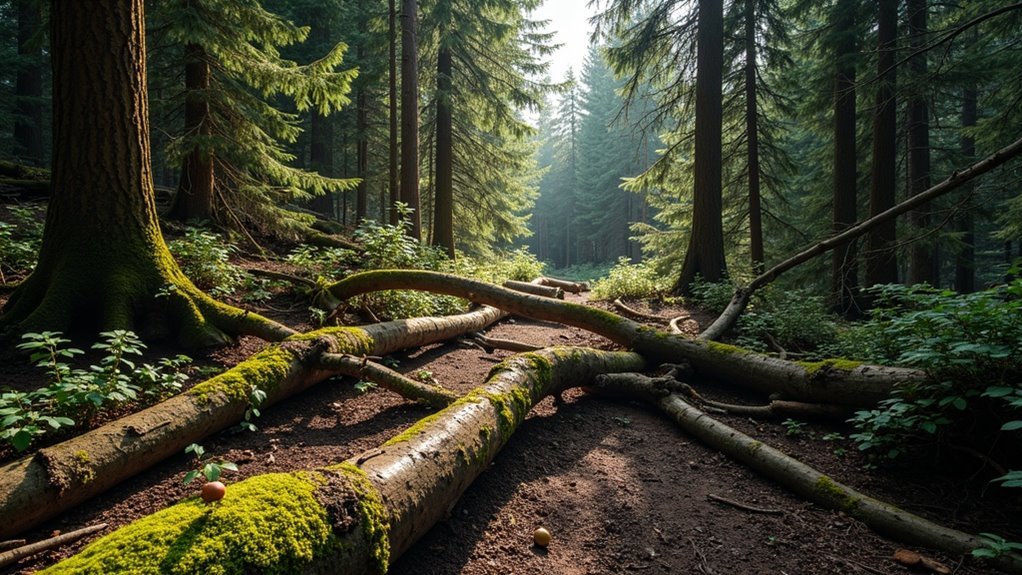
A deadfall hazard on forest hiking trails includes fallen trees and branches that can block your path or fall unexpectedly from above, creating dangerous situations. Snags, or dead trees, may collapse due to decay or instability, while areas affected by wildfires often have numerous risks. In fact, millions of dead trees increase the likelihood of encountering these hazards. Staying aware of your surroundings is essential for safety, and you’ll discover more about how to protect yourself against these hazards.
Key Takeaways
- Deadfall hazards include fallen trees and branches that obstruct trails, posing risks to hikers.
- Snags, or dead trees, can fall unexpectedly due to rot and instability, increasing danger.
- Areas affected by wildfires often have unstable trees, creating prolonged hazards for trail users.
- Factors like drought, infestations, and climate change contribute to the growing number of deadfall hazards.
- Awareness and identification of dead trees, hung snags, and widow-makers are crucial for hiker safety.
Understanding Deadfall Hazards
Understanding deadfall hazards is essential for anyone venturing into wooded areas, especially since fallen trees and branches can obstruct trails and pose considerable risks.
Dead trees, or snags, can fall unexpectedly due to rot and instability, even on calm days. In Colorado alone, an estimated 834 million snags contribute to the potential dangers hikers face.
Areas affected by wildfires also heighten these risks, as burned trees can remain unstable for years.
Recent Incidents of Falling Trees
Recent incidents of falling trees have resulted in tragic fatalities, such as Finn Bastian on the Pacific Crest Trail and Beth Skelley on the Colorado Trail.
These events highlight a historical pattern of danger, with similar incidents occurring on popular trails in recent years.
However, the lack of thorough statistical data complicates our understanding of the true risks posed by deadfall hazards in hiking environments.
Notable Fatalities Reported
Although hiking offers a chance to connect with nature, it can also present unexpected dangers, including the tragic risk of falling trees. Notable fatalities have occurred, such as Finn Bastian, who died in August 2022 on the Pacific Crest Trail.
Beth Skelley was killed by a tree while sleeping in her tent on the Colorado Trail. In 2015 and 2018, hikers lost their lives on the Appalachian Trail due to fallen trees, and two children tragically died in Yosemite Valley when an oak limb struck their tent.
The lack of extensive statistics complicates understanding the true scope of these incidents.
Historical Context of Incidents
As hikers navigate the trails, they often encounter the lingering dangers of falling trees, which have a long history of causing serious injuries and fatalities.
In August 2023, Finn Bastian, 28, lost his life to a falling tree on the Pacific Crest Trail, while Beth Skelley, 56, was killed when a tree fell on her tent in Colorado.
Tragically, two hikers died on the Appalachian Trail in 2015 and 2018 due to similar hazards.
In Yosemite Valley, two children were struck by a falling oak limb in 2015, highlighting the unpredictable nature of tree-related dangers on hiking trails.
Lack of Statistical Data
The absence of detailed statistical data on recent incidents of falling trees poses a significant challenge for understanding the true risks hikers face on trails.
While tragic fatalities, like those of Finn Bastian and Beth Skelley, highlight the dangers associated with dead trees, many incidents remain unreported.
Previous tragedies on popular trails, including the Appalachian Trail, further emphasize the need for thorough statistics to assess hiker safety.
This lack of information complicates effective trail maintenance strategies, which are vital for minimizing hazards.
Without reliable data, it’s tough to gauge the real extent of danger posed by falling trees to hikers.
Factors Contributing to Increased Risk
Given the growing impact of climate change, hikers face an increasing risk from deadfall hazards on trails. Several factors contribute to this heightened danger:
- Drought and Infestations: Approximately 129 million trees have died in California since 2010, leading to more dead trees, or snags, on trails.
- Increased Snags: Colorado reported an estimated 834 million snags by 2017, a 30% rise since 2010, indicating more tree fall risks.
- Wildfire Aftermath: Burn areas harbor unstable dead trees, prone to spontaneous falls for years post-wildfire, heightening the hazard for hikers.
Stay vigilant and prioritize safety.
Identifying Dead Trees on Trails
Identifying dead trees on trails is vital for your safety as a hiker. Look for dead trees, often called snags, which lack foliage and display brittle branches or decay at their base.
In areas affected by drought or pests, the risk of encountering these hazards increases considerably. Be cautious of hung snags—dead trees precariously caught in others—and widow-makers, broken branches ready to fall with minimal disturbance.
Wildfire-affected regions particularly harbor many downed trees, raising the potential for spontaneous collapses. Staying vigilant helps you navigate safely around these dangerous obstacles while hiking through beautiful forests.
Safety Precautions for Hikers
Before you rest, take a moment to evaluate your surroundings for any hung snags or widow-makers that could fall unexpectedly.
Stay alert to environmental sounds, as creaking trees can signal instability overhead.
Evaluate Surroundings Before Resting
How can you guarantee your safety while enjoying a break on the trail? Before you rest, take a moment to evaluate your surroundings.
Be especially cautious of dead trees and potential hazards like hung snags and widow-makers.
Follow these steps for a safer resting spot:
- Look for leaning trees or those with broken branches.
- Move your tent or resting area away from visible hazards.
- Quickly check for signs of rot or instability in surrounding trees.
Recognize Signs of Instability
What should you look for when evaluating the safety of your surroundings on the trail? First, watch for leaning trees or those showing signs of rot; they’re often unstable.
Listen for creaking sounds, which might indicate a tree’s imminent fall. Be cautious around burn areas where dead trees, or snags, are common and more likely to fall.
Avoid resting or camping beneath unhealthy trees or those with dead branches. Finally, stay alert during windy conditions, as even healthy trees can become dangerous.
If you spot risky trees, consider notifying the appropriate authorities to remove trees and enhance trail safety.
Awareness of Environmental Conditions
As you prepare for your hike, being aware of environmental conditions is essential for your safety.
Stormy weather can increase the risk of deadfalls, especially when heavy rain saturates the soil, leading to uprooted trees. High winds can also pose threats, even to healthy trees.
Stormy weather heightens the danger of deadfalls, as saturated soil can uproot trees, while high winds threaten even the healthiest ones.
To stay safe, keep these points in mind:
- Check weather forecasts to anticipate stormy conditions.
- Observe trees overhead for signs of instability, like leaning or bobbing.
- Listen for creaking sounds, which can indicate potential hazards.
Legal and Ethical Considerations
While hiking, it’s essential to understand the legal and ethical considerations surrounding deadfall management.
Cutting deadfall on marked trails is usually accepted, but legal issues arise on unauthorized paths. Only designated trail crews should handle removal to avoid complications.
Use common sense and caution; improper actions can lead to liability concerns and safety hazards. Always notify park authorities before attempting any maintenance, as certification may be needed for tools like chainsaws.
Local regulations often restrict individual maintenance, emphasizing the need to follow established protocols to protect the environment and guarantee the safety of all hikers.
Community Perspectives and Stewardship
Community stewardship plays an essential role in maintaining hiking trails, as it encourages a collective responsibility among outdoor enthusiasts.
By engaging in trail maintenance, you help create safer experiences for everyone. Here are three ways you can contribute:
Engaging in trail maintenance fosters safer experiences and strengthens our community commitment to preserving nature.
- Join local trail crews to participate in organized clean-ups and maintenance efforts.
- Acknowledge fellow hikers for their contributions in clearing deadfall, fostering a supportive community.
- Discuss best practices for trail maintenance, unifying perspectives on responsible stewardship.
Embracing community stewardship not only enhances the trails but also strengthens connections among those who cherish these natural spaces.