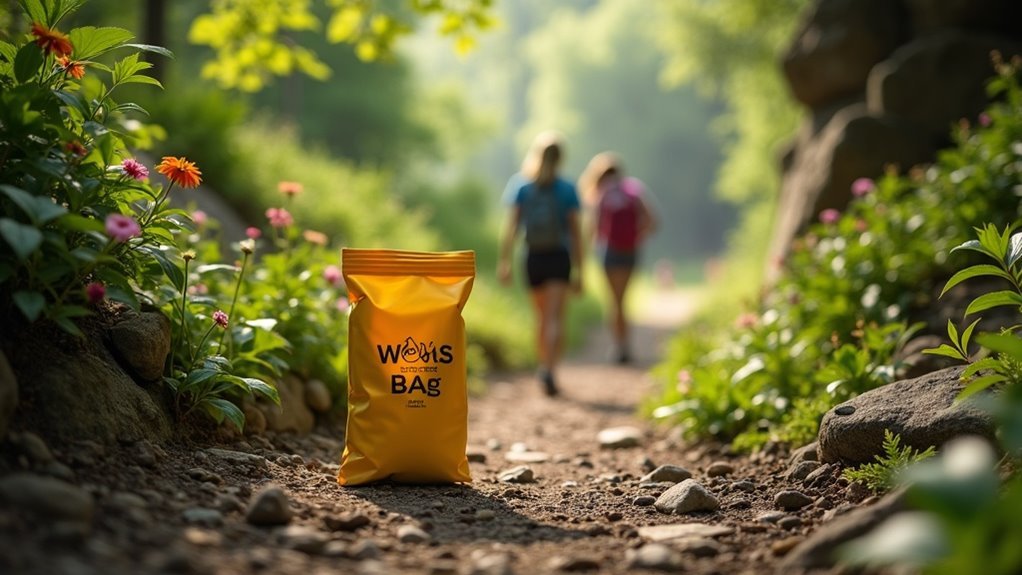
A WAG Bag is a portable toilet designed for hikers to safely manage human waste in remote areas. It uses Waste Alleviation and Gelling technology, including Poo Powder to deodorize and solidify waste. By using WAG Bags, you protect fragile ecosystems and comply with regulations in many national parks. After use, simply seal the bag and dispose of it at designated waste containers. Interested in learning about their components and proper usage? Keep going!
Key Takeaways
- A WAG Bag is a portable toilet solution designed for remote hiking areas to manage human waste responsibly.
- It contains Poo Powder® to deodorize and solidify waste, minimizing environmental impact.
- WAG Bags are often required in national parks to protect ecosystems and promote Leave No Trace principles.
- Users should dispose of sealed bags in designated waste containers after use to prevent contamination.
- Regulations in places like Mount Whitney and Zion National Park mandate the use of WAG Bags for all visitors.
Understanding WAG Bags and Their Purpose
When you’re out hiking in remote areas, understanding WAG bags and their purpose is essential for maintaining the integrity of the environment.
These portable toilets, also known as human waste bags, are designed for places where traditional waste disposal methods aren’t feasible. Utilizing Waste Alleviation and Gelling technology, WAG bags contain Poo Powder, which deodorizes and solidifies waste for hygienic transport.
Many national parks require their use to protect delicate ecosystems. By sealing the inner bag tightly and packing it out, you help preserve nature and practice Leave No Trace principles, ensuring pristine wilderness for future adventurers.
Components of a WAG Bag
A WAG Bag is equipped with essential components that make outdoor waste management efficient and hygienic.
This handy kit guarantees you’re prepared for any adventure in National Parks. Here’s what you’ll find inside:
- Waste Bags pre-loaded with Poo Powder®, a gelling powder that solidifies up to 32 oz. of waste.
- Puncture-resistant zip-close disposal bag for safe transport of used waste.
- Individual toilet paper to maintain hygiene during your outdoor activities.
- Hand wipe for additional sanitation after using the WAG Bag.
These features enhance the experience while minimizing your impact on nature.
How to Properly Use a WAG Bag
To properly use a WAG bag, first choose a secluded spot at least 200 feet away from water sources and trails for privacy.
After using the bag, seal it tightly and pack it away from your food items to avoid contamination.
Finally, make sure to dispose of the sealed bags at designated trailhead waste containers to protect the environment.
Choosing the Right Location
Where should you go when it’s time to use a WAG bag? Choosing the right location is essential for minimizing environmental impact and ensuring privacy. Follow these guidelines:
- Pick a secluded spot at least 200 feet away from water sources, trails, and campsites.
- Open the WAG bag, ensuring it’s prepared for waste collection.
- Use the odor-neutralizing powder to gel your waste effectively.
- Seal the inner collection bag tightly and place it inside the durable outer bag before packing it out.
Sealing and Packing Properly
Once you’ve finished using the WAG bag, sealing and packing it properly is essential for maintaining hygiene and preventing odors.
Start by opening the bag to access the inner odor-absorbing bag and the powder, which helps neutralize and gel your waste. After depositing, seal the inner bag tightly to prevent leaks and odors.
Next, place the sealed inner bag into the durable outer bag, ensuring it’s completely sealed. For effective waste management, pack out used bags in a designated spot in your pack, away from food, and prepare for disposal at trailheads or designated waste disposal areas.
Disposal at Trailheads
Disposing of your WAG bag properly at trailheads is essential for maintaining the environment and public health.
Follow these steps for responsible waste management:
- Seal it tight: After use, tightly seal the inner bag and place it in the outer bag for leak protection.
- Pack wisely: Store used WAG bags in a designated area of your pack, away from food items to guarantee hygiene.
- Follow regulations: Dispose of filled bags at designated disposal sites, adhering to local guidelines.
- Check specific rules: Always review park guidelines for any unique disposal requirements to minimize environmental impact.
Environmental Impact of Human Waste
Improperly managing human waste during hikes can lead to significant environmental consequences that affect both health and ecosystems.
Human fecal matter can harbor harmful viruses and bacteria, like E. coli, posing risks to hikers and fragile ecosystems. In high-traffic areas, waste takes years to decompose, causing long-term damage to flora and fauna.
As hiking popularity increases, so does waste, impacting soil health and water quality. Using WAG bags provides a responsible disposal method, reducing environmental contamination where traditional catholes can’t be dug.
The mandated use of WAG bags in parks like Mount Whitney highlights the need to protect sensitive ecosystems from human waste.
Regulations Requiring WAG Bags in Various Locations
When you’re hiking in sensitive areas like Mount Whitney or national parks such as Zion and Grand Canyon, you need to be aware of regulations requiring WAG bags for waste management.
These rules help protect fragile ecosystems and maintain the natural beauty of the landscapes you love.
Mount Whitney Requirements
How can you guarantee a responsible hiking experience in the Mount Whitney Zone? To protect this delicate ecosystem, you must carry a WAG bag for waste disposal.
Here are some key requirements:
- Each hiker needs one WAG bag for overnight trips.
- Use WAG bags to prevent human waste from contaminating water sources.
- Dispose of waste properly to protect the environment.
- Comply with regulations to preserve Mount Whitney for future generations.
National Park Regulations
Why is it vital to follow waste disposal regulations in national parks? Compliance with these rules, like using WAG bags, is essential for protecting delicate ecosystems from human waste and environmental contamination. Each park has specific requirements to guarantee proper waste management.
| National Park | WAG Bag Requirement | Reason for Requirement |
|---|---|---|
| Mount Whitney | Mandatory for all visitors | Fragile alpine environment |
| Zion National Park | One kit per person for overnight trips | Prevents contamination from human waste |
| Grand Canyon | Encouraged use of toilet kits | Protects water sources |
| Canyonlands & Arches | Required for all visitors | Limited organic material in desert soils |
Environmental Protection Mandates
Proper waste disposal isn’t just a guideline in national parks; it’s a mandate that directly impacts environmental health. Regulations requiring WAG bags guarantee responsible disposal of human waste, protecting fragile ecosystems.
Here are some key mandates:
- Mount Whitney Zone: WAG bags are mandatory to safeguard its delicate alpine environment.
- Zion National Park: Requires one waste kit per person for overnight trips.
- Grand Canyon National Park: Encourages toilet kits to prevent water contamination.
- Canyonlands and Arches: Enforce WAG bags due to limited organic soil and high visitor numbers.
Adhering to these mandates is essential for effective waste management and environmental protection.
Tips for Effective Waste Management in the Wilderness
While enjoying the great outdoors, it is essential to manage your waste effectively to protect the environment. Always use a WAG bag in sensitive areas to prevent environmental contamination from human waste. Here are some tips to follow:
| Action | Purpose | Notes |
|---|---|---|
| Use gelling powder | Neutralizes odors | Included in the WAG bag |
| Pack out used WAG bags | Prevents contamination | Keep separate from food |
| Choose a secluded spot | Minimizes impact | At least 200 feet from water |