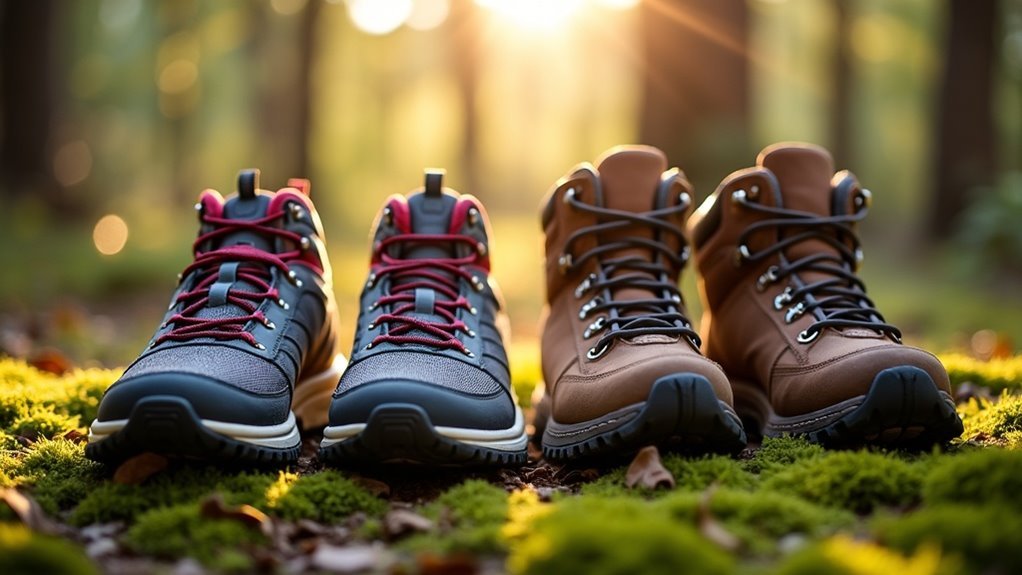
Hiking shoes are lightweight and low-cut, designed for agility and comfort on well-maintained trails, making them ideal for day hikes. In contrast, hiking boots feature a high-cut design that offers exceptional ankle support and durability for rugged terrains. While shoes excel in flexibility and breathability, boots provide stability under heavy loads. Your choice depends on the hiking conditions and your needs for protection and weight. There’s more to reflect upon before making your decision.
Key Takeaways
- Hiking shoes are lightweight and low-cut, enhancing agility, while boots are high-cut, providing better ankle support.
- Shoes are more flexible, allowing for greater movement, whereas boots offer stability under heavy loads with stiffer soles.
- Hiking shoes are ideal for day hikes on well-maintained trails, while boots are suited for rugged terrain and long-distance treks.
- Boots are typically more durable and last longer than shoes, which have a lifespan of around 800 miles.
- Proper fit is crucial; shoes should allow relaxed toes, while boots must fit securely around the heel for optimal support.
What Are Hiking Shoes?
Hiking shoes are essential gear for outdoor enthusiasts looking for a lightweight option on well-maintained trails. Designed with a low-cut, lightweight profile, they enhance agility and comfort, making them ideal for day hikes.
Featuring flexible construction and rugged rubber outsoles, these shoes provide reliable traction on flat to moderately uneven trails, reducing fatigue. Their breathable mesh uppers promote airflow, keeping your feet cool during warm weather.
Most hiking shoes require minimal break-in time, allowing you to enjoy immediate comfort. As a versatile option, they cater to casual hikers seeking lighter packing solutions without sacrificing performance.
What Are Hiking Boots?
When tackling rugged trails, the right footwear can make all the difference, and hiking boots stand out for their high-cut design that offers exceptional ankle support and stability.
Constructed from durable materials like full-grain leather or synthetic fabrics, these boots endure harsh conditions while providing long-lasting wear. Their stiffer soles guarantee better control and support under heavy loads, making them ideal for long-distance hikes.
Many hiking boots feature waterproof membranes to keep your feet dry, though this may affect breathability. With deep-set lugs on the outsole, they deliver excellent traction on steep ascents and descents, enhancing your overall hiking experience.
Key Differences Between Hiking Shoes and Boots
Although both hiking shoes and boots serve the purpose of providing support and protection during outdoor activities, they cater to different hiking styles and conditions.
Hiking shoes are lightweight and low-cut, ideal for day hikes on well-maintained trails, while hiking boots offer superior ankle support and stability for rugged terrain.
Boots are more durable, lasting thousands of miles, whereas shoes typically last around 800 miles.
The flexibility of shoes provides agility, but may sacrifice stability on uneven surfaces.
Ultimately, your choice depends on personal preference, considering factors like protection, weight, and the specific conditions you’ll encounter on your adventures.
When to Choose Hiking Shoes or Boots
Choosing the right footwear for your outdoor adventures can greatly impact your comfort and performance.
Opt for hiking shoes when tackling day hikes on well-maintained trails or in warm weather; their lightweight design offers flexibility. If you’re carrying heavier loads or facing steep, uneven surfaces, hiking boots provide essential ankle support and stability.
Their durability is vital for long-distance treks, lasting thousands of miles compared to the 500-750 miles of hiking shoes.
Verify you achieve a proper fit: shoes should allow relaxed toes, while boots need a secure fit to support your feet effectively during challenging conditions.
Essential Features of Hiking Footwear
Understanding the essential features of hiking footwear is key to selecting the right pair for your adventures.
Hiking shoes provide a lightweight, low-cut design for agility and comfort, ideal for day hikes. They often feature breathable materials for warm conditions and flexible soles for traction.
In contrast, hiking boots offer high-cut designs for superior ankle support and stability, vital on rugged terrain. They’re heavier but provide enhanced protection against harsh elements.
A proper fit is vital; shoes should feel snug in the heel with ample toe space, while boots must secure your foot to prevent movement and guarantee comfort over long distances.