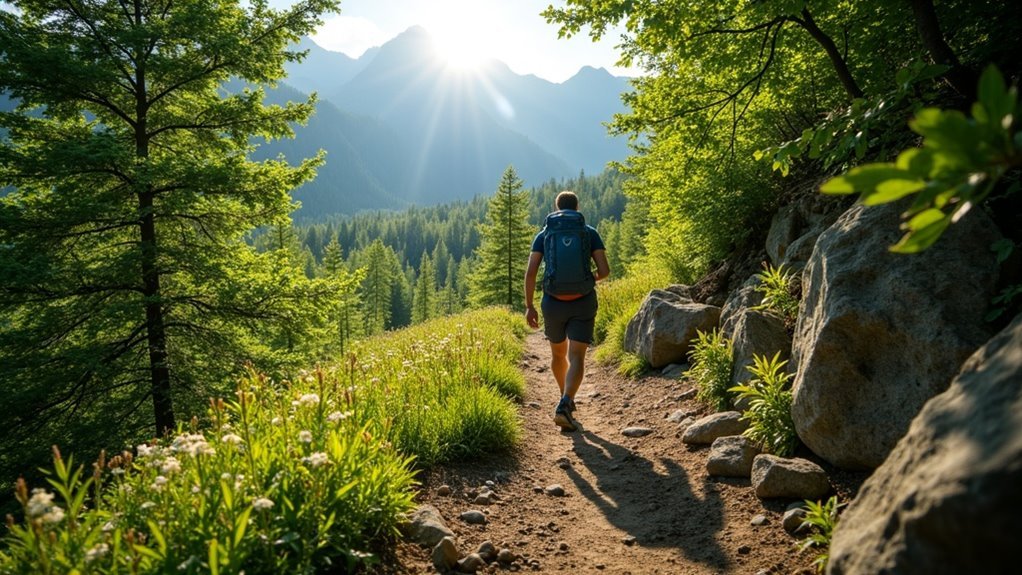
Fastpacking is an exciting blend of trail running and ultralight backpacking that lets you cover impressive distances while carrying only the essentials. You’ll embrace speed and efficiency, trekking anywhere from 25 to 40 miles a day with a lightweight pack weighing around 10-15 pounds. This style emphasizes self-sufficiency, allowing you to connect deeply with nature and explore pristine wilderness away from the crowds. Want to learn how to gear up and prepare for your first fastpacking adventure?
Key Takeaways
- Fastpacking is a hybrid of trail running and ultralight backpacking, focusing on speed and efficiency.
- It typically involves covering 25 to 40 miles a day with essential gear weighing 10-15 pounds.
- This hiking style emphasizes self-sufficiency, allowing for overnight trips in remote areas.
- Fastpacking combines jogging and power-hiking for enhanced freedom of movement and connection with nature.
- Participants often use lightweight, calorie-dense food and hydration systems to maintain energy and endurance.
What Is Fastpacking?
When you think of fastpacking, imagine a thrilling blend of trail running and ultralight backpacking that lets you cover vast distances with ease.
This exciting outdoor style emphasizes speed and efficiency, allowing you to explore the great outdoors while carrying only essential gear weighing 10-15 pounds.
Experience the thrill of fastpacking, where speed meets efficiency while carrying just 10-15 pounds of essential gear.
You’ll jog across flat terrain and power-hike uphill, all while enjoying the freedom of movement.
Unlike ultrarunning, fastpacking isn’t competitive; it focuses on self-sufficiency during overnight trips.
With lightweight safety equipment, a hydration system, and a compact shelter, you’re equipped to push your physical and mental limits in nature’s embrace.
Reasons to Try Fastpacking
If you’re craving a physical challenge, fastpacking is the perfect way to push your limits while exploring the great outdoors.
You’ll cover more ground in less time, uncovering hidden gems of nature that most hikers miss. This exhilarating style not only tests your endurance but also deepens your connection with the wilderness around you.
Physical Challenge
Fastpacking isn’t just a hike; it’s a thrilling test of your physical limits that combines endurance and strength as you tackle challenging terrains at a brisk pace.
You’ll push yourself to cover long distances, often between 25 to 40 miles a day, while carrying an ultralight pack weighing just 10 to 15 pounds.
This unique blend of trail running and backpacking not only enhances your cardiovascular health but also builds mental resilience.
Each step you take strengthens your body and sharpens your mind, preparing you to face the next adventure with confidence and determination, both physically and mentally.
Nature Exploration
As you venture into the world of fastpacking, you’ll uncover the beauty of nature like never before. This unique approach allows you to explore remote backcountry areas, covering more ground than traditional backpacking.
With ultralight gear, you’ll embrace a minimalist lifestyle, enhancing your self-sufficiency and navigation skills. Each step fosters mindfulness, connecting you deeply with the wilderness as you move.
Fastpacking offers solitude away from crowds, inviting you to experience adventure in pristine settings. By pushing your limits, you’ll discover your capabilities while reveling in the diverse terrains that nature has to offer, making every journey truly unforgettable.
Essential Gear for Fastpacking
When gearing up for fastpacking, aiming for a lightweight pack around 15 pounds is essential for maintaining speed and agility on the trails.
Aiming for a lightweight pack around 15 pounds is key to achieving speed and agility on your fastpacking adventures.
Focus on these essential items to enhance your experience:
- Hydration System: Lightweight water bottles and filtration methods guarantee you’re refreshed and hydrated.
- Sleep System: Consider an ultralight tarp shelter or tent to protect you from the elements while minimizing weight.
- First Aid Kit: Equip yourself with essential supplies to address injuries and guarantee safety in remote areas.
With the right lightweight gear, you’re ready for an unforgettable adventure while serving nature and others.
Nutrition Strategies for Fastpacking
When fastpacking, your nutrition choices can make or break your experience on the trail.
You’ll want to focus on calorie-dense, lightweight options like energy bars, nuts, and dehydrated meals that fuel your body without weighing you down.
Don’t forget to plan how you’ll stay hydrated, as proper hydration is key to maintaining your energy and performance throughout your journey.
Caloric Intake Essentials
Maintaining the right caloric intake is essential for successful fastpacking, where you’ll need to consume between 300 and 600 calories each hour to keep your energy levels high.
Proper nutrition is key, so focus on incorporating:
- High-carbohydrate snacks like energy bars and gels for quick energy boosts.
- Calorie-dense treats such as nuts and dried fruits to sustain energy over time.
- Dehydrated meals for lightweight packing, ensuring easy preparation and recovery nutrition.
Lightweight Food Options
As you gear up for fastpacking, choosing lightweight food options is essential for sustaining your energy and performance on the trail.
Focus on high-calorie, nutrient-dense items like nuts, dried fruits, and energy bars to keep your energy levels steady.
Dehydrated or freeze-dried meals, weighing just 4-6 ounces, are perfect for quick preparation with hot water.
Incorporate carb-heavy snacks like granola or trail mix to provide immediate energy, aiming for 300-400 calories per hour of exertion.
Finally, pack longer-lasting proteins and fats, such as jerky or nut butter, for recovery during those multi-day fastpacking trips.
Hydration Strategies
Selecting the right lightweight food options sets the stage, but hydration plays an equally essential role in your fastpacking journey.
To stay energized and avoid fatigue, here are three key hydration strategies:
- Carry a lightweight water bottle or bladder that allows for easy access while you’re on the move.
- Monitor refill opportunities along your route, aiming for 0.5 to 0.75 liters of water per hour.
- Incorporate electrolyte tablets or powder into your hydration mix to maintain balance and prevent cramping.
Training for Fastpacking Adventures
To commence a successful fastpacking adventure, it’s crucial to build a solid training foundation that enhances your endurance and strength. Gradually increase your hiking and running distances, focusing on the first miles per day. Incorporate weighted hikes with gear simulating your pack’s weight for peak strength.
| Training Activity | Purpose |
|---|---|
| Tempo Runs | Improve aerobic capacity |
| Long Hikes | Build endurance |
| Strength Training | Enhance overall fitness |
| Recovery Strategies | Maintain high performance |
| Consistent Schedule | Keep training on track |
Following these guidelines guarantees you’re ready for the challenges of fastpacking.
Planning Your Fastpacking Trip
While planning your fastpacking trip, it’s essential to choose a route that aligns with your fitness level and experience, taking into account the terrain, distance, and elevation gain.
Choosing a route that matches your fitness level and experience is crucial for an enjoyable fastpacking trip.
Aim for a lightweight load of 10-15 pounds to enhance your movement.
Consider these essentials:
- Right Gear: Breathable clothing and sturdy footwear for comfort.
- Hydration and Nutrition: Pack lightweight, high-calorie snacks and identify water sources along the trail.
- Miles Per Day: Plan your daily distance to match your stamina on a multi-day trail.
Always check the weather forecast and follow Leave No Trace principles to respect nature.