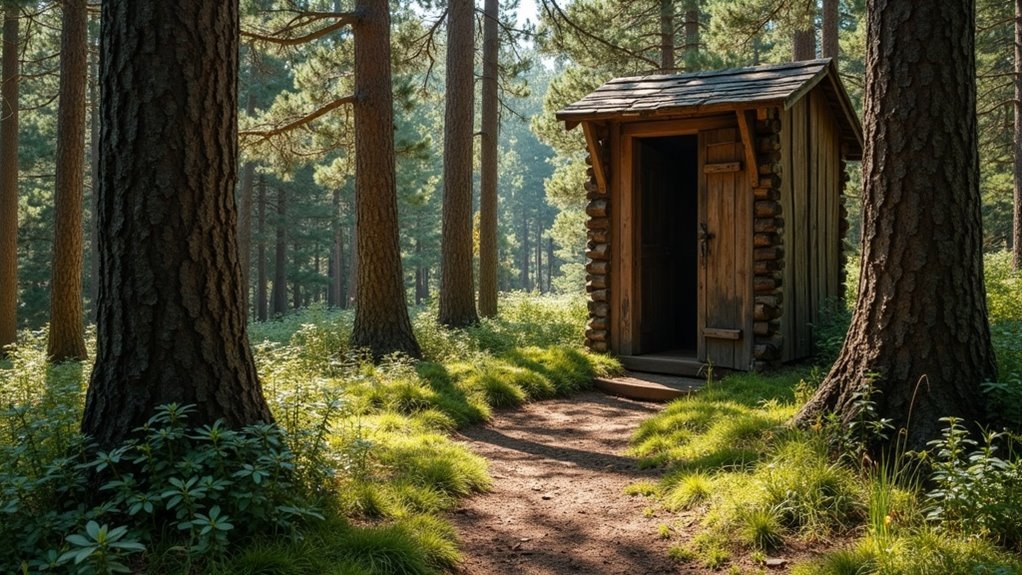
A privy on hiking trails is a facility designed for managing human waste in remote areas without plumbing. It helps keep the environment clean and reduces pollution risks while enhancing your outdoor experience. There are different types, like pit and moldering privies, each offering specific benefits for waste breakdown. By using these facilities responsibly, you can contribute to trail sustainability. If you’re curious about best practices and how ridgerunners help, there’s more to explore!
Key Takeaways
- A privy is a designated toilet facility on hiking trails, managing human waste in areas without plumbing.
- Types of privies include pit privies and moldering privies, each with different waste breakdown methods.
- Moldering privies use aerobic bacteria for faster decomposition, reducing odors and contamination risks.
- Proper waste management through privies enhances environmental protection and the overall hiking experience.
- Ridgerunners maintain privies and educate hikers on responsible waste disposal practices to preserve the wilderness.
Understanding Privies: Purpose and Function
When you hit the trails, understanding the purpose and function of privies can enhance your hiking experience. These essential facilities, often called outhouses, manage human waste in remote areas where plumbing isn’t available.
By using privies, you help maintain the natural beauty of the environment while reducing pollution risks. Some privies, like moldering types, even use composting techniques, allowing aerobic bacteria to break down waste into usable dirt over time.
Engaging in proper maintenance and following disposal guidelines not only keeps these facilities clean but also fosters a spirit of community, ensuring everyone can enjoy the trails responsibly.
Types of Privies: Pit, Moldering, and Composting
When you hit the trails, understanding the different types of privies can enhance your outdoor experience.
Pit privies are basic, low-cost options that require a bit of patience, while moldering privies offer faster waste breakdown and odor control.
Let’s explore how these systems work and their impact on the environment.
Pit Privy Basics
Exploring the world of privies reveals a variety of options, each with its own unique features and benefits.
The pit privy, often seen in backcountry sanitation, is a simple, low-cost structure built over a hole in the ground for waste collection. While it’s effective, issues like unpleasant odors and cramped conditions can arise, along with the risk of contamination due to the lengthy decomposition process that can take decades.
Once the hole fills, relocation becomes necessary. Understanding pit privies helps you appreciate the importance of choosing the right sanitation method while enjoying the great outdoors responsibly.
Moldering Privy Advantages
Moldering privies offer a sustainable alternative to traditional pit privies, allowing you to enjoy the outdoors without compromising environmental health.
These innovative systems feature multiple above-ground chambers that use aerobic bacteria, speeding up the composting process and reducing decomposition time to about two years.
With less odor and a lower risk of contamination, they enhance your hiking experience.
By adding bulking agents like wood shavings, you improve aeration, further promoting effective composting.
The result? Pathogen-free compost that enriches the forest.
Trail clubs in New England and Virginia are embracing moldering privies for their environmental benefits and superior waste management.
Importance of Proper Waste Management
When you’re out on the trails, proper waste management isn’t just a courtesy; it’s essential for protecting the environment and enhancing your hiking experience.
By using privies and catholes responsibly, you help keep the water clean and the landscape beautiful for everyone.
Environmental Protection Necessity
Proper waste management is vital for preserving the natural beauty and ecological health of hiking trails, especially those that attract heavy foot traffic like the Appalachian Trail.
By using privies or catholes, you can help minimize environmental degradation and protect water quality. Composting privies transform human waste into pathogen-free compost, reducing contamination risks.
However, community education is important; around 25% of hikers disregard proper disposal rules, which increases maintenance challenges.
Visitor Experience Enhancement
Using privies on hiking trails not only preserves the environment but also greatly boosts your overall experience in the great outdoors. Well-maintained privies, especially composting privies, keep the backcountry clean and odor-free, enhancing your enjoyment.
When waste is managed properly, you can immerse yourself in nature without the distraction of unpleasant sights and smells. Educational initiatives guide proper waste disposal, encouraging cooperation among hikers to maintain these essential facilities.
Regular volunteer maintenance guarantees that privies function effectively, promoting responsible practices and safeguarding the wilderness. A clean trail experience means you can focus on what truly matters—exploring and enjoying nature.
Water Quality Preservation
Maintaining the beauty of our wilderness areas hinges on responsible waste management, particularly through the use of privies.
Moldering privies play a crucial role in safeguarding water quality by efficiently breaking down waste, minimizing pathogens, and reducing the risk of contamination. Unlike traditional pit privies that can take decades to decompose, these systems enhance the environment within just two years.
However, about 25% of users ignore disposal rules, threatening privy effectiveness and water safety. By embracing regular maintenance and community education, we can guarantee that proper waste management practices thrive, ultimately preserving the pristine nature we all cherish.
Role of Ridgerunners in Maintenance
Ridgerunners play a crucial role in maintaining the cleanliness and functionality of privies along the Appalachian Trail. These dedicated seasonal employees hike four days a week, ensuring that privies are clean and effective.
They manage waste by monitoring bin levels and facilitating the composting process. When a privy bin fills up, Ridgerunners promptly shift the toilet seat to a new bin, keeping everything running smoothly.
They also dig through bins to remove non-biodegradable trash, promoting responsible waste disposal. Through education and community cooperation, Ridgerunners encourage hikers to embrace Leave No Trace principles, preserving the wilderness for everyone to enjoy.
Community Involvement and Education
While Ridgerunners play an essential role in keeping privies functional, community involvement is equally important for ensuring cleanliness in outdoor spaces.
Here’s how you can contribute:
- Volunteer for local organizations like the Green Mountain Club.
- Participate in educational campaigns promoting Leave No Trace principles.
- Engage in mulch resupply trips with groups like the Smoky Mountains Hiking Club.
Best Practices for Hikers Using Privies
When you venture into the great outdoors and encounter a privy, using it properly is essential for preserving the environment.
Always opt for biodegradable materials like toilet paper or wood shavings to support effective composting. Non-biodegradable items, such as wipes and wrappers, should be packed out in a resealable bag to guarantee waste management remains efficient.
After each use, add a layer of mulch to control odors and enhance composting. Remember to follow the posted guidelines, as about 25% of users don’t.