Blaze colors in hiking trail systems are essential for safe navigation. Each color serves a specific purpose: red indicates shared-use trails for foot, bike, and horseback travel, while orange signifies hiking-only trails. Blue marks cross-country ski paths, and yellow shows local hiking options. Visibility matters too—bright colors and clear spacing between markers help you stay oriented. Understanding these colors enhances your outdoor experiences. Keep exploring to discover more about effective navigation and community trail awareness.
Key Takeaways
- Red blazes indicate shared-use trails for activities like horseback riding, biking, and foot travel.
- Orange markers signify hiking-only state forest trails designated for foot travel only.
- Blue blazes guide cross-country ski trails, often marked with a skier symbol.
- Yellow blazes represent local hiking trails meant for nearby adventurers.
- Blaze colors in Pennsylvania are standardized for clarity and effective navigation.
Understanding Trail Blaze Colors
Trail blaze colors serve as essential signposts in the wilderness, guiding hikers along their chosen paths.
These trail blazes indicate different types of hiking trails and their intended usage, ensuring safe navigation. For instance, red marks shared-use trails, while orange indicates hiking-only state forest trails. Blue blazes highlight cross-country ski trails, and yellow marks local hiking trails.
Trail blazes guide hikers by indicating trail types, ensuring safe navigation through the wilderness.
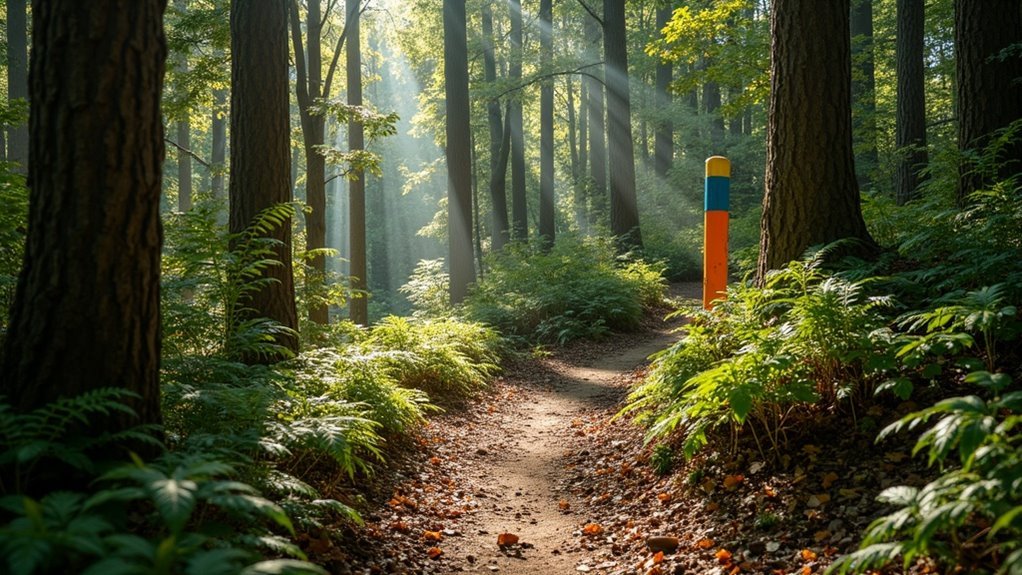
Each blaze, measuring about 2 inches wide by 6 inches tall, is strategically placed at eye level for easy visibility.
Understanding these trail markings helps you follow the right path and enhances your hiking experience, making your journey enjoyable and purposeful.
Common Blaze Colors and Their Meanings
When you’re out exploring the great outdoors, understanding common blaze colors can greatly enhance your hiking experience.
Red blazes indicate shared-use trails open to horseback riding, mountain biking, and foot travel, promoting multi-use access.
Orange markers signal state forest hiking trails meant for foot travel only, ensuring a safe space for hikers.
Blue blazes guide cross-country ski trails, often featuring a skier symbol at the trailhead.
Meanwhile, yellow blazes represent local hiking trails, providing easy access for nearby adventurers.
In Pennsylvania, these colors are standardized, enhancing clarity and navigation across various trails, making your journey smoother and more enjoyable.
The Importance of Blaze Visibility
When you’re out on the trail, blaze visibility plays a key role in keeping you oriented and safe. Bright colors help you spot markers from a distance, ensuring you stay on the right path even in tricky conditions.
Plus, clear blazes at intersections guide you seamlessly through your adventure, letting you focus on enjoying nature instead of worrying about where to go next.
Enhanced Navigation Accuracy
Maneuvering through the wilderness can be a challenging task, but with the right blaze visibility, you can confidently find your way.
Here’s why blaze visibility is essential for effective navigation:
- Bright Colors: Trail markers are painted in distinct hues that stand out against natural backgrounds, ensuring you spot them easily.
- Strategic Placement: Blazes are positioned at eye level or higher, especially in snowy conditions, to maintain visibility.
- Consistent Spacing: The distance between markers is maintained to keep you oriented.
- Trail Identification: Different colors represent individual trails, helping you navigate intersections with confidence.
Safety in Challenging Conditions
Maneuvering through the wilderness can quickly become intimidating in challenging conditions like dense fog, heavy snowfall, or darkness. That’s where blaze visibility becomes essential.
Markers, often painted on trees and stacked on top of each other in different colors, guide you safely along your path. These vibrant blazes, placed at eye level or higher, guarantee you can spot them even when the ground is hidden.
With proper maintenance, these navigational aids remain effective, helping you stay oriented. In adverse weather, recognizing the unique colors allows you to identify your route quickly, reducing the risk of getting lost in difficult terrain.
Clear Trail Intersections
As you approach a trail intersection, the clarity of blaze visibility becomes essential for your navigation. Properly identified blaze colors guarantee you don’t stray off course. Here’s why visibility matters:
- Trail Identification: Different blaze colors indicate specific trail uses, like red for shared trails.
- Consistent Markers: Trail markers are placed just above eye level, enhancing visibility in dense foliage.
- Prevent Confusion: Clear markers at junctions help you make informed decisions.
- Two-Way Navigation: Markers on both sides of trees guarantee hikers can identify paths from either direction.
Stay alert, and let the blazes guide your adventure!
Trailblaze Systems in North America vs. Europe
When you hit the trails, you’ll notice that North American blaze colors stick to a straightforward system, using single colors to guide your journey.
In contrast, Europe’s trail marking combines colors and symbols, offering a richer, albeit more complex, navigation experience.
Understanding these differences can enhance your hiking adventures, whether you’re in the vast forests of North America or the scenic paths of Europe.
North American Blaze Colors
While exploring the vast hiking trails of North America, you’ll notice a distinct approach to blaze colors that sets it apart from European systems.
North American trail systems use single colors for clarity, represented by painted rectangles that are about 2 inches wide by 6 inches tall.
Here’s a quick guide to common blaze colors:
- Red – Shared-use trails
- Orange – Hiking trails
- Blue – Skiing trails
- Yellow – Local hiking paths
These colors help with navigation, as blazes are positioned just above eye level, making trail markings clear and effective for all hikers.
European Trail Marking Standards
North American blaze colors provide a straightforward way to navigate trails, but European trail marking standards take a more nuanced approach.
In Europe, blazes often feature distinct colors and symbols, each with specific meanings. The most common color, white, indicates the main hiking trail, while additional hues signal different routes or difficulty levels.
You’ll notice that European markers are placed closely together, making them easy to spot, especially in challenging terrain.
Unlike North America’s varied blaze shapes, European systems prioritize consistent colors and symbols, offering clear navigation for hikers dedicated to exploring and serving the trails responsibly.
Specific Blaze Colors for Different Trail Uses
As you navigate the diverse landscape of hiking trails, understanding the specific blaze colors can enhance your outdoor experience.
Each blaze color serves a unique purpose, guiding you to the right trail for your adventure. Here’s a quick rundown:
- Red blazes: Indicate shared-use trails open to horseback riding, mountain biking, and foot travel.
- Orange blazes: Designate state forest hiking trails for foot travel only.
- Blue blazes: Mark cross-country ski trails, often featuring a skier symbol.
- Yellow blazes: Signal local hiking trails within your community.
Knowing these blaze colors guarantees you choose the best trail for your journey!
How to Identify Trail Markers
Recognizing trail markers is essential for a successful hiking experience. Blazes, often seen on the Appalachian Trail, serve to mark a trail and guide you in the right direction.
You’ll encounter different types of blazes: a single straight blaze indicates the trail continues ahead, while a double blaze shows a turn, with the top offset blaze indicating direction.
Different blazes guide your journey: a single means go straight, while a double signals a turn ahead.
Three markers arranged in a triangle mark a trailhead. Colors matter too—red may represent shared-use trails, while orange is for hiking-only paths.
Regular checks of these markers by trail maintainers guarantee your journey remains safe and enjoyable. So, keep an eye out!
Navigating Trail Intersections
How do you make sense of multiple trails converging at an intersection? Understanding blazes is key. Here’s how to navigate effectively:
- Look for different colors: Each color blaze usually represents a unique trail.
- Identify overlapping blazes: These indicate shared pathways or connections.
- Check the top blaze: In double blaze configurations, it shows the correct direction.
- Assess the area: Take a moment to study available blazes and signs before proceeding.
Community Engagement and Trail Awareness
When you immerse yourself in the hiking community, you’ll quickly discover how essential trail awareness is for both novice and seasoned hikers alike.
Experienced hikers often lead workshops, sharing insights about blaze colors and their meanings, which help everyone navigate effectively. Engaging with fellow hikers fosters a supportive environment where you can exchange personal experiences related to trail navigation.
Local organizations frequently host events to promote trail awareness, encouraging collaboration between hikers and trail maintainers. By participating, you contribute to a culture of safety and knowledge, ensuring that everyone can enjoy the trails with confidence and respect for nature.