The three-layer rule for hiking clothing helps you manage comfort and performance in various conditions. Start with a breathable base layer to wick moisture away and keep your skin dry. Next, choose an insulating mid-layer that retains warmth while allowing moisture escape. Finally, an effective outer layer should protect you from wind and rain, featuring high breathability. Proper layering lets you adjust to changes in weather and activity. Discover more tips to optimize your hiking gear.
Key Takeaways
- The three-layer system consists of a breathable base layer, an insulating mid layer, and a protective outer layer.
- The base layer wicks moisture away from the skin, keeping you dry and preventing hypothermia.
- The mid layer provides insulation and should be moisture-wicking to retain warmth even when wet.
- The outer layer protects against wind and rain, featuring breathability for moisture escape and adjustable elements for fit.
- Layering allows for adjustments based on weather changes and activity levels, ensuring comfort and preparedness during hikes.
Understanding the Three-Layer Rule for Hiking
When you head out for a hike, understanding the Three-Layer Rule for hiking clothing can greatly enhance your comfort and performance.
The system consists of a base layer, mid layer, and outer layer. Your base layer, made from moisture-wicking materials like polyester or merino wool, keeps your skin dry.
The three-layer system includes a moisture-wicking base layer to keep your skin dry and comfortable.
The mid-layer provides insulation, trapping air to help you stay warm while allowing moisture to escape, often using fleece or synthetic fabrics.
Finally, the outer layer protects against weather conditions, utilizing waterproof and breathable materials like Gore-Tex.
Adapting this three-layer system guarantees comfort, regardless of the environment.
The Importance of a Breathable Base Layer
A breathable base layer is essential for maintaining comfort during hikes, as it efficiently wicks moisture away from your skin. By managing sweat, it helps keep you dry, preventing discomfort and potential hypothermia.
Made from technical fabrics like polyester, polyamide, or merino wool, a good base layer dries quickly and provides insulation, ensuring you stay warm even when wet. The right sleeve length can enhance comfort based on temperature and elevation.
Ultimately, wearing a breathable base layer aids in regulating your body temperature, promoting better performance and enjoyment on your outdoor adventures while serving your hiking companions effectively.
Choosing the Right Insulating Mid Layer
After you’ve selected a breathable base layer, the next step is to focus on the insulating mid-layer, which plays an essential role in maintaining warmth during your hike.
Choose materials that are moisture-wicking and can retain insulation even when wet, like synthetic fabrics or treated down.
Having multiple options for varying weather conditions is key; a lightweight fleece works well for mild temperatures, while a thicker insulated jacket is better for the cold.
Look for ventilation features, such as zippers, to help regulate body temperature and prevent overheating during high-intensity activities.
Prioritize breathability for ideal comfort and performance.
Selecting an Effective Outer Layer for Protection
Selecting the right outer layer is essential for effective protection against the elements during your hike. Look for materials that are windproof and waterproof, ensuring you stay dry and warm.
Consider these features when choosing your outer layer:
- High breathability ratings to allow perspiration escape
- Hoods and high collars for added weather protection
- Adjustable hems for a custom fit
- Lightweight and packable design for easy transport
Investing in a quality outer layer will help you confidently tackle any weather, keeping you comfortable and focused on serving others during your outdoor adventures.
Adapting Your Layers to Weather Conditions
When you’re hiking, adapting your clothing layers to changing weather conditions is essential for maintaining comfort and performance.
Start with a breathable base layer made of moisture-wicking material to keep your skin dry. As temperatures drop, add a mid-layer, like fleece, to help keep warm by trapping heat while allowing breathability.
Begin with a moisture-wicking base layer for dryness, then layer on fleece to trap warmth and ensure breathability as temperatures fall.
In case of unexpected rain or wind, a packable waterproof outer layer is vital for staying dry without adding bulk.
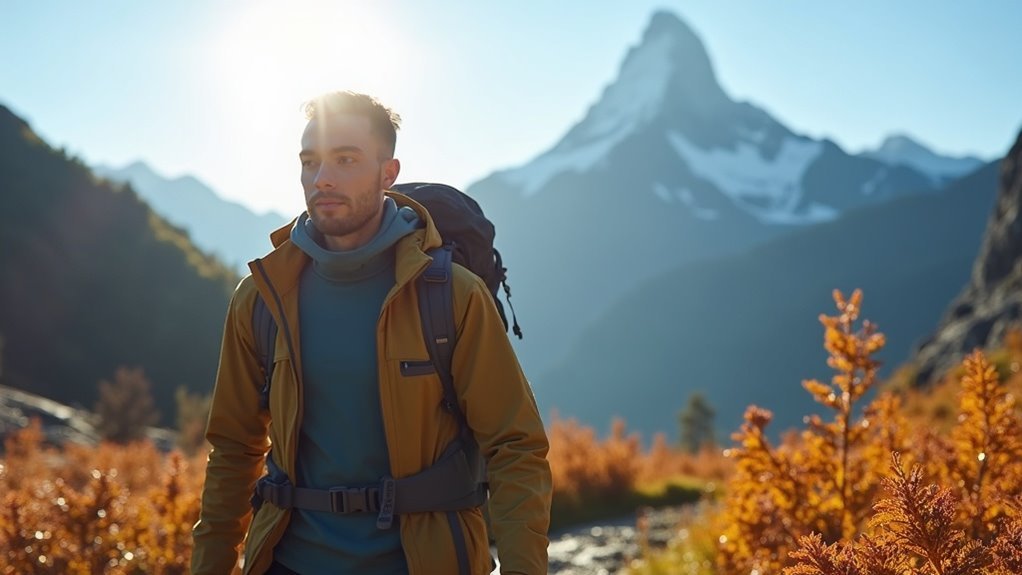
Layering enables you to adjust your clothing based on activity intensity and altitude changes, ensuring you’re prepared for any weather scenario during your hike.