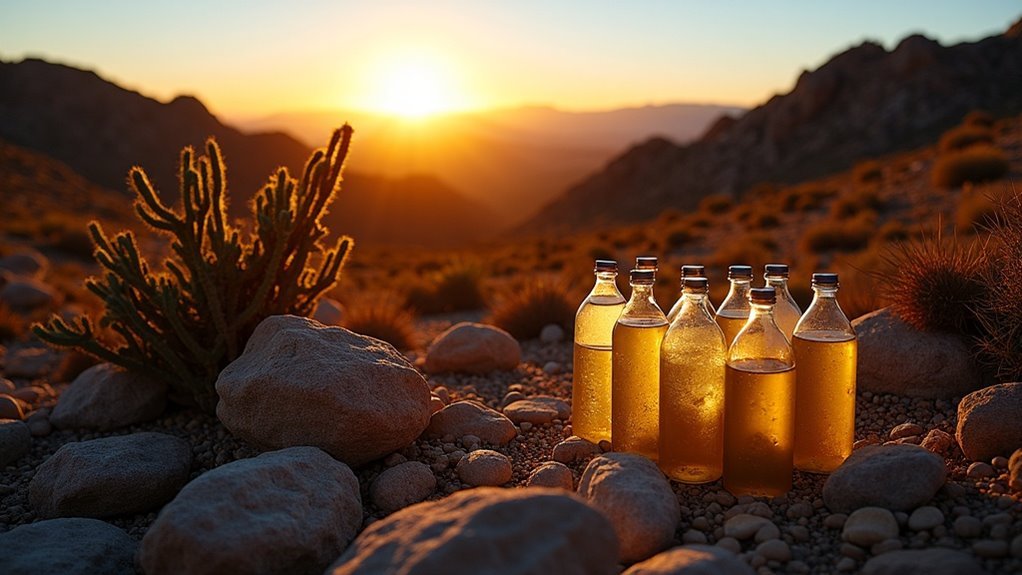
A water cache in desert hiking is a pre-placed supply of water that helps you stay hydrated in dry areas where natural sources are sparse. These caches are often established by trail angels and can be lifesavers during long treks. However, it’s essential not to over-rely on them, as they may be empty or unreplenished. To guarantee your safety, plan your routes around natural water sources. There’s much more to contemplate for safe hiking in these challenging environments.
Key Takeaways
- A water cache is a reserve of water placed along hiking trails in arid areas to support hydration during long stretches without natural sources.
- Established by trail angels, water caches help hikers avoid dehydration in desert environments where water is scarce.
- Effective water management is crucial; hikers should plan routes and mark cache locations to ensure availability and avoid over-reliance.
- Caches can pose risks if not replenished, leading to potential dehydration and undermining trail ethics if used irresponsibly.
- Responsible caching practices include using durable containers, discreet locations, and regularly monitoring caches while minimizing environmental impact.
Understanding Water Caches and Their Purpose
When you’re hiking in the desert, understanding water caches and their purpose can be a game-changer for your journey.
Water caches, often established by generous trail angels, provide reliable water in areas with limited natural sources. These caches support your hydration needs during long, dry stretches, but proper water management is essential.
Mark their locations and plan your route to guarantee you don’t become overly reliant on them. Remember, while caching water can be a lifesaver, their availability may vary.
Respect the environment by minimizing disturbances and avoid leaving waste, making sure these resources remain for future hikers.
The Risks of Over-Reliance on Caches
Although water caches can be lifesavers in the desert, relying on them too heavily can put you at risk. Over-reliance can lead to dehydration if you carry insufficient water.
Relying too heavily on water caches in the desert can lead to dangerous dehydration if you don’t carry enough water.
Here are some key risks to take into account:
- You might find caches empty or unreplenished.
- Neglecting to identify reliable water sources can jeopardize your safety.
- Unexpected trail conditions could leave you without water.
- Trusting caches sets a poor example, undermining trail ethics.
Effective planning involves knowing your route and being prepared.
Always have a backup plan to guarantee you stay hydrated and support a culture of responsibility among fellow hikers.
Environmental Impact of Water Caching
While water caching can be a practical solution for desert hikers, it’s essential to contemplate the environmental consequences that come with it.
Water caches often become trash sites, with empty plastic water bottles littering fragile desert ecosystems, causing environmental degradation. Additionally, these bottles contribute to microplastic pollution, harming wildlife and contaminating soil and water sources.
Caching water can also attract animals, altering their natural behaviors and creating potential dangers for both hikers and wildlife.
Ultimately, storing water in plastic under the sun degrades water quality, leaching harmful chemicals, while depleting limited natural water resources in already stressed environments.
Best Practices for Caching Water
Caching water in the desert can be a lifesaver for hikers, but doing it wisely is key to ensuring both your safety and the environment’s well-being.
Follow these best practices for effective water caching:
- Choose strategic locations that are discreet and less frequented to minimize disturbances.
- Use durable containers like 1-gallon bottles or 5-gallon buckets to protect cached water.
- Mark cache locations with flagging tape and take photos for easier retrieval.
- Monitor caches regularly and pack out any empty containers to maintain environmental integrity.
Alternatives to Water Caches for Hikers
Have you ever considered the benefits of planning your hikes around natural water sources instead of relying solely on water caches?
Utilizing reliable water sources not only keeps you hydrated but also reduces pack weight. Lightweight, collapsible water containers make it easier to carry enough water for long hikes.
Using dependable water sources keeps you hydrated and lightens your load with portable, collapsible containers for long treks.
Engaging in trail magic by providing water and snacks to fellow hikers at trail crossings fosters a sense of community. Plus, building a network with other hikers can help you share essential information about water availability.
Use topographic maps and apps like FarOut to find and plan around these natural sources effectively.