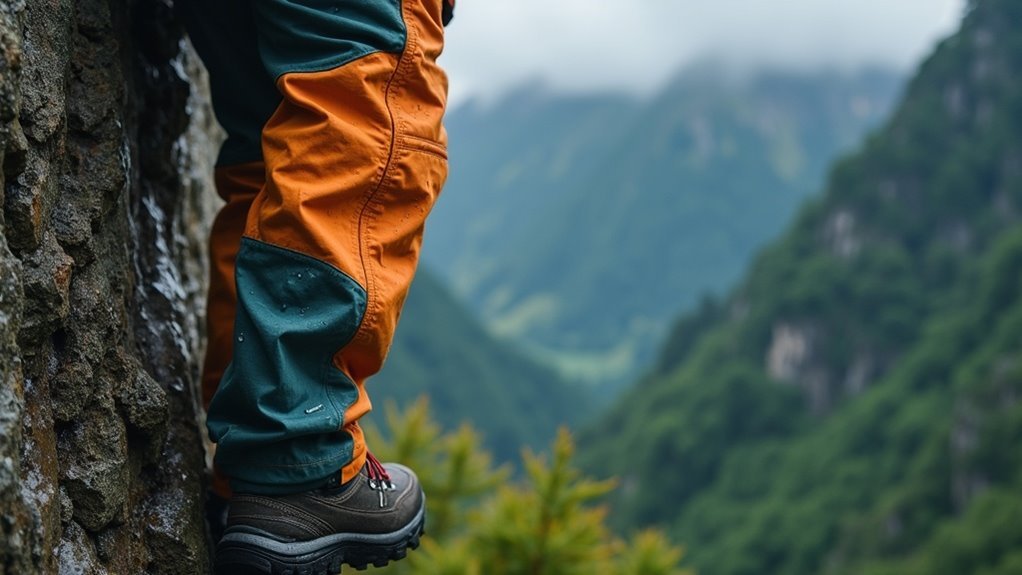
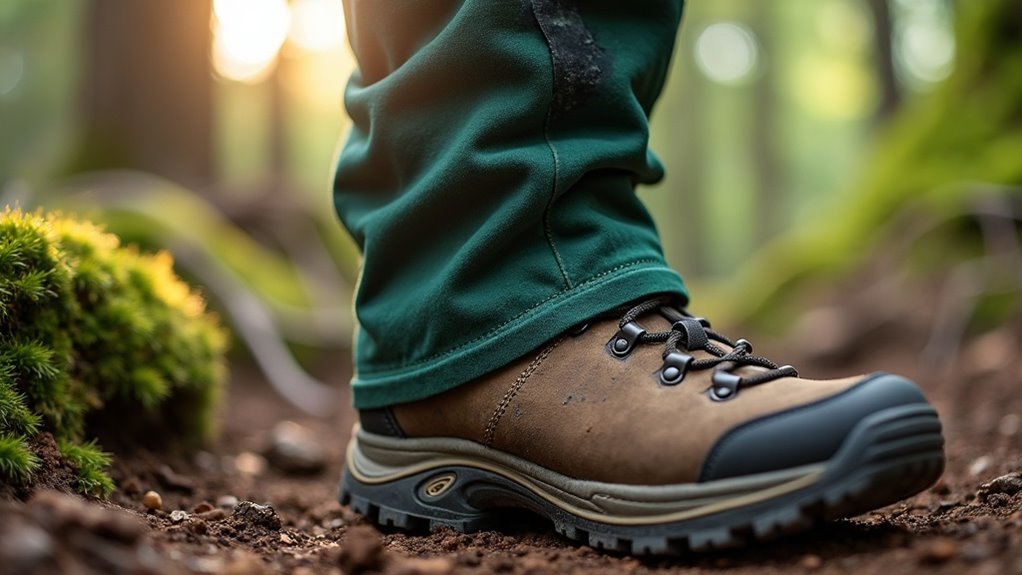
Gaiters are protective garments you wear over your lower legs and footwear during hikes. They shield against debris, mud, and moisture, keeping your socks dry and comfortable. Gaiters prevent stones and thorns from entering your boots, enhancing your hiking experience. With various heights and styles, you can choose the right pair for different terrains and weather conditions. Curious about the types available or how to properly wear and maintain them? There’s more to discover!
Key Takeaways
- Gaiters protect lower legs and footwear from debris, mud, and moisture during hiking.
- They prevent stones, thorns, and branches from entering boots, enhancing comfort.
- Gaiters keep socks dry and warm, providing insulation in cold conditions.
- Available in various lengths, they cater to different terrains and weather conditions.
- Adjustable features ensure a secure fit, enhancing overall hiking experience and reducing blisters.
Definition and Purpose of Gaiters
Gaiters are essential protective garments that shield your lower legs and footwear while hiking, effectively keeping debris, mud, and moisture at bay.
Designed to prevent stones, thorns, and branches from entering your boots, they guarantee your socks and feet stay dry and comfortable.
Available in various heights—ankle, mid-length, and full-length—gaiters provide tailored protection based on hiking conditions.
Made from waterproof or water-repellent materials, they maintain dryness in wet terrains.
Additionally, gaiters add an extra layer of defense against cuts and scrapes, enhancing your overall comfort during rugged outdoor adventures.
Invest in gaiters for a more enjoyable hiking experience.
Benefits of Wearing Gaiters for Hiking
Wearing gaiters on your hikes offers significant benefits, especially in protecting your lower legs and footwear from debris and moisture.
They help keep your socks dry and comfortable while adding an extra layer of insulation in colder conditions.
Plus, with various styles available, you can easily find a pair that suits your specific terrain and weather, enhancing your overall hiking experience.
Debris Protection Benefits
When you venture into the great outdoors, especially on rugged trails or off the beaten path, keeping debris at bay becomes essential for a comfortable hike.
Gaiters provide excellent debris protection by preventing rocks, thorns, and mud from entering your boots. Designed to fit around your legs snugly, they create an extra layer of defense, helping protect your feet from abrasions and discomfort.
This barrier also reduces moisture exposure, maintaining dryness in wet conditions. By enhancing stability and support, gaiters minimize the risk of debris shifting into your footwear, ensuring you can focus on enjoying your adventure.
Moisture Management Features
While exploring challenging trails, staying dry is essential for an enjoyable hiking experience. Gaiters fit around your ankles, creating a water-resistant barrier that prevents moisture from rain, snow, and wet terrain from seeping into your boots.
This effective moisture management is vital for maintaining foot comfort and health, greatly reducing the risk of blisters caused by wet socks. Many gaiters utilize breathable fabric, allowing moisture to wick away from your feet, regulating temperature and humidity.
With gaiters, you can traverse various terrains confidently, knowing your footwear’s integrity is protected, enhancing your overall hiking performance.
Comfort and Support
Gaiters enhance your hiking experience by providing essential comfort and support throughout your trek.
These versatile accessories include a snug fit around your lower legs, offering protection against rocks, sand, and thorns that can cause discomfort. Their moisture-wicking properties keep your socks dry, markedly reducing the risk of blisters and enhancing overall comfort.
Additionally, certain gaiters provide insulation, keeping you warm in colder weather. They also help distribute pressure, reducing fatigue during long hikes and enhancing stability by securing pant legs, preventing them from snagging on underbrush.
Embrace gaiters for an improved hiking experience!
Types of Gaiters Available
Hikers have several options when it comes to gaiters, each tailored for specific environments and conditions.
Ankle gaiters are lightweight, perfect for trail running, protecting from the top of your footwear to the bottom of your trousers.
Lightweight ankle gaiters are ideal for trail running, shielding your legs from debris while keeping you comfortable on the move.
Mid-length gaiters, measuring 8 to 12 inches, suit moderate conditions, offering protection against rain and debris.
For rugged terrains, full-length gaiters, measuring 15 to 18 inches, provide extensive coverage, ideal for deep snow and wet weather.
Additionally, specialized snow gaiters keep snow out and can integrate with ski boots or pants, enhancing your winter hiking experience.
Gaiter Height and Sizing Considerations
When choosing gaiters, you need to take into account their height based on your hiking conditions.
Taller gaiters offer maximum protection in snow and off-trail environments, while mid-calf and shorter options are great for moderate and summer hikes.
Proper sizing is essential, so guarantee a snug fit around your boots and calves to keep out water and debris effectively.
Recommended Gaiter Heights
Choosing the right height for your gaiters can markedly enhance your hiking experience, especially as conditions vary.
Here are some recommended heights to take into account:
- Taller Gaiters (15-18 inches): Best for snow and off-trail use, offering extra coverage to protect against deep snow and wet weather.
- Mid-Calf Gaiters (8-12 inches): Ideal for moderate conditions, effectively keeping out debris and light rain during hiking.
- Shorter Gaiters (over the ankle): Perfect for trail running or summer hikes, providing lightweight protection against small debris.
Proper Sizing Guidelines
To guarantee your gaiters provide ideal protection and comfort during your hikes, proper sizing is essential. When selecting gaiters, verify they fit well around your boots and calves to avoid loose areas or openings that let in moisture. Here’s a quick guide to help you choose:
| Gaiter Height | Ideal Use |
|---|---|
| Over-the-ankle | Light hiking, trail running |
| Mid-calf (8-12 in) | Mixed conditions, moderate snow |
| Knee (15-18 in) | Deep snow, rugged terrains |
Adjustments for larger calves can enhance the fit. Remember, snug is best for comfort and performance!
Key Features of Gaiters
Gaiters serve as essential gear for hikers, as they effectively guard against debris, moisture, and snow that can invade your boots.
Here are some key features that enhance your hiking experience:
- Waterproof Materials: Many gaiters utilize GORE-TEX to keep your feet dry while allowing breathability.
- Height Variations: Choose from taller options for deep snow or shorter versions ideal for trail running.
- Secure Fit: Adjustable hook-and-loop closures and instep straps guarantee a snug fit, preventing slippage and enhancing protection against trail debris.
With these features, gaiters provide the ultimate defense for your outdoor adventures.
How to Properly Wear and Adjust Gaiters
When you’re ready to hit the trails, knowing how to wear and adjust your gaiters correctly can make a significant difference in your comfort and protection.
Position them with the hook-and-loop closures in front, wrapping the fabric securely around your legs. Place the instep strap buckles outside your boots to avoid kicks while walking and adjust for a snug fit. Confirm the bottoms seal tightly around your boots to block moisture and debris.
Engage the lace hooks low on your laces, and for larger calves, secure the hook-and-loop closures with a half-inch overlap, keeping top closures snug but comfortable.
Maintenance Tips for Gaiters
After getting your gaiters fitted properly, maintaining them is key to ensuring they perform well on your hikes.
Here are some essential maintenance tips:
- Regularly inspect your gaiters for signs of wear, especially buckles, straps, and seams, to keep them functional.
- Clean them with a damp cloth and warm water after each use, particularly in muddy or dusty conditions.
- Apply a waterproofing spray to restore water resistance, enhancing protection against moisture.