Microspikes are lightweight traction devices specifically designed for winter hiking, giving you the grip you need on icy trails. They attach easily to your footwear with a flexible harness and enhance stability, reducing slips on tricky terrain. Weighing about 11 ounces, they’re practical for any hiking gear. Microspikes are ideal for well-maintained paths with icy patches, catering to casual hikers. As you explore further, you’ll understand their benefits and proper use even better.
Key Takeaways
- Microspikes are lightweight traction devices designed for winter hiking on icy trails, enhancing stability and reducing slips.
- They easily attach to various footwear, making them versatile for different hiking scenarios.
- Ideal for well-maintained trails with icy patches, microspikes boost confidence for casual hikers.
- Weighing around 11 oz per pair, they are practical and easy to carry on hikes.
- Regular maintenance, like cleaning and inspection, ensures the longevity and effectiveness of microspikes.
Understanding Microspikes
When you’re tackling icy trails, understanding microspikes can make all the difference in your winter hiking experience.
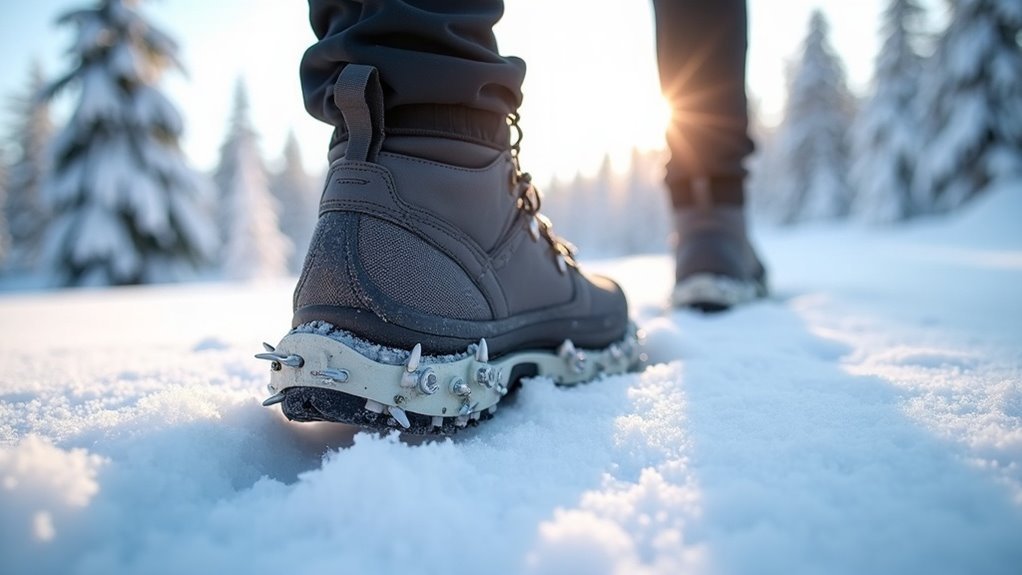
These lightweight traction devices attach easily to your footwear, featuring a flexible harness that allows for comfort and adaptability. Designed for well-maintained trails with icy conditions, microspikes provide the essential grip needed for safety.
The spikes, typically measuring between 0.25 to 0.5 inches, enhance stability without requiring specialized climbing skills. Weighing around 11 oz per pair, they make a practical addition to your hiking gear.
With microspikes, you can confidently navigate slippery surfaces and enjoy winter hiking to the fullest.
Benefits of Using Microspikes
While winter hiking can offer breathtaking views and serene landscapes, the icy conditions can pose considerable challenges.
Winter hiking reveals stunning vistas, but the icy terrain can present significant obstacles.
Microspikes provide essential benefits that enhance your experience:
- Traction: They grip icy surfaces, ensuring safety on winter hikes.
- Lightweight: At just 11 oz per pair, they’re easy to carry.
- Versatile: Compatible with various footwear, they suit different winter conditions.
- Enhance Stability: Microspikes considerably reduce slips, boosting your confidence on tricky terrain.
When to Use Microspikes
Microspikes are a game changer for winter hiking, especially in icy conditions. You’ll want to use them on trails where icy patches prevail, providing essential traction without the need for specialized skills.
They shine on well-maintained paths that mix clear areas with slippery spots, allowing casual hikers to navigate confidently. Ideal for less technical terrains, microspikes enhance your stability in changing winter conditions.
Comprised of small spikes attached to a flexible harness, you can easily wear them over your regular hiking boots or snow boots. Lightweight and user-friendly, they’re perfect for various winter hiking activities.
Comparing Microspikes to Other Traction Devices
When you’re choosing the right traction device for winter hiking, it’s crucial to compare microspikes with crampons and snowshoes.
Microspikes excel on well-maintained trails with icy patches, while crampons offer superior grip for steep climbs.
Understanding these differences can help you make an informed decision based on your hiking conditions and terrain.
Microspikes vs. Crampons
Choosing the right traction device for winter hiking can greatly impact your safety and enjoyment on the trails. Here’s how microspikes compare to crampons:
- Microspikes: Ideal for packed snow and icy trails, featuring small spikes for stability.
- Crampons: Designed for technical climbing with larger, aggressive spikes for superior grip on steep terrains.
- Weight: Microspikes weigh about 11 ounces; crampons can weigh considerably more.
- Usage: Microspikes suit casual hikers, while crampons are better for serious mountaineers tackling challenging conditions.
Consider your hiking needs to choose the right traction for winter trails!
Microspikes vs. Snowshoes
While both microspikes and snowshoes serve essential roles in winter hiking, they cater to different conditions and needs.
Microspikes excel in icy conditions, providing traction on packed snow and trails with small spikes that weigh only about 11 oz per pair.
In contrast, snowshoes are designed for deep snow, distributing weight over a larger surface area to prevent sinking, but they struggle on icy surfaces.
For well-maintained trails and flatter terrain, microspikes are your best bet.
Choose snowshoes for unbroken powder, but remember, they can be bulkier and heavier, affecting your overall hiking experience.
How to Properly Fit Microspikes
To guarantee microspikes fit properly, start by selecting the right size that matches your footwear, whether it’s mountaineering or standard snow boots.
Follow these steps for an ideal fit:
- Slide the microspikes over your boots, confirming the elastomer harness secures the shoe entirely.
- Check that spikes are evenly distributed, with front spikes at the toe for enhanced traction.
- Confirm the fit is snug but comfortable, allowing slight movement without slippage.
- Walk a few steps in them to assess comfort and stability on icy terrain, adjusting as necessary for a secure experience.
Care and Maintenance for Microspikes
To keep your microspikes in top shape, regularly inspect them for any signs of wear or damage.
After each use, make sure to clean them thoroughly to prevent rust and extend their lifespan.
Proper storage is essential too; always store them in a dry place to avoid moisture buildup that can lead to corrosion.
Regular Inspection Procedures
Regular inspection of your microspikes is essential for guaranteeing their performance and safety during winter hikes.
To maintain peak performance on snow and ice, follow these steps:
- Check for wear: Inspect spikes for flattening or damage.
- Verify secure fit: Confirm microspikes fit snugly on your footwear to prevent slippage.
- Review care instructions: Follow manufacturer guidelines for upkeep.
- Store properly: Keep microspikes in a dry place to avoid rust and deterioration.
Cleaning After Use
Cleaning your microspikes after each use is essential for maintaining their performance and longevity.
Start by removing any snow, ice, or debris to prevent rust. Use a soft brush or cloth to wipe down both the spikes and elastomer harness, guaranteeing no moisture remains trapped.
Regularly inspect your microspikes for wear and tear; flattened spikes can greatly reduce traction effectiveness.
Proper maintenance also includes storing them in a dry place away from moisture, which prolongs their lifespan.
Always follow manufacturer guidelines for specific cleaning and maintenance instructions to ensure your microspikes remain reliable for your winter hiking adventures.
Proper Storage Techniques
How can you guarantee your microspikes remain in peak condition between winter hikes? Proper storage techniques are essential for maintaining their performance and extending their lifespan. Follow these steps:
- Clean your microspikes thoroughly to remove dirt and moisture, preventing rust.
- Store them in a dry, cool environment, preferably in a breathable bag to avoid moisture buildup.
- Regularly inspect for wear and tear, replacing damaged spikes to promote ideal performance.
- Avoid using microspikes on non-icy surfaces to minimize wear.
Real-Life Applications of Microspikes in Winter Hiking
When you’re tackling winter hikes, microspikes can be invaluable tools for ensuring safety and stability on icy trails.
Weighing just 11 oz per pair, these devices fit securely over your hiking boots, providing essential traction with their 12 stainless steel spikes. They shine on well-maintained trails, enhancing your confidence and reducing the risk of slips and falls.
The flexible harness allows for quick shifts between icy and clear surfaces, making them perfect for dynamic hiking conditions. Regular use of microspikes not only boosts your safety but also empowers you to navigate winter hiking adventures with ease, even in icy regions like Crested Butte.