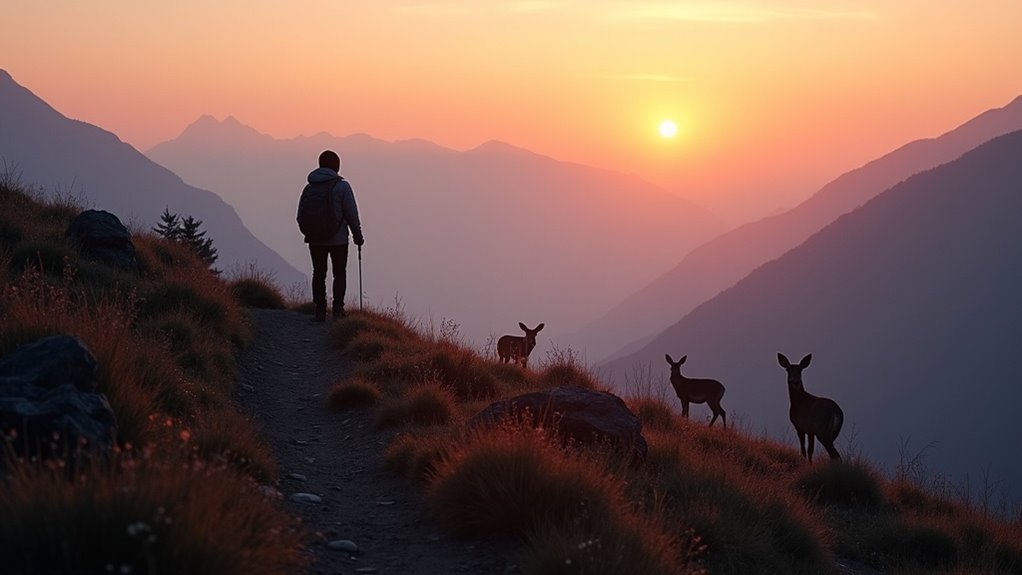
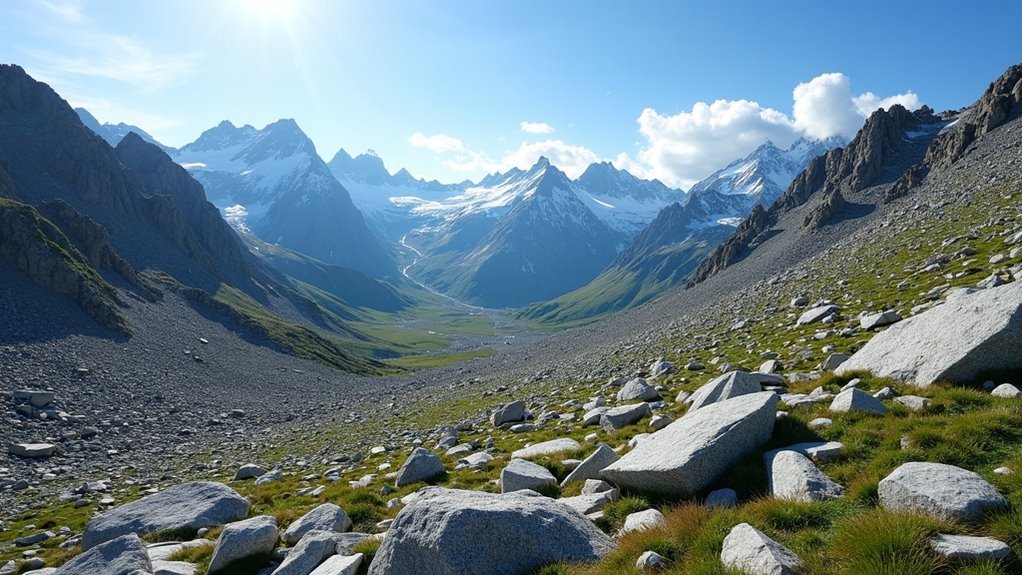
A scree field in alpine hiking is a slope covered in loose stones and pebbles, created by the weathering process and freeze-thaw cycles. As you navigate these unstable terrains, you’ll feel the challenge of finding solid footing among shifting rocks. Use trekking poles for balance and take careful, deliberate steps to minimize slipping. Conquering a scree field can be exhilarating, but it’s crucial to stay cautious and aware of your surroundings to tackle the unique challenges ahead.
Key Takeaways
- A scree field consists of loose stones and pebbles, often unstable, found at the base of steep slopes in alpine environments.
- It forms from weathering and freeze-thaw cycles, accumulating debris over time due to erosion.
- Navigating scree requires careful techniques, such as using a zigzag approach and placing feet on solid patches.
- Safety precautions include wearing sturdy footwear, using trekking poles, and maintaining focus on foot placement to avoid slips.
- Successful navigation through a scree field offers both exhilaration and respect for the inherent dangers of the terrain.
Understanding Scree and Talus
When you step onto a scree field, you might feel the ground shift beneath your feet, reminding you of the unique challenges that alpine environments present.
Scree consists of loose stones and pebbles, often unstable and tricky to navigate. In contrast, talus features larger rock fragments and boulders, providing more stability.
Both are products of weathering and freeze-thaw cycles, shaping the rugged terrain you encounter. Recognizing the differences between scree and talus is essential for your safety.
Techniques for Navigating Scree Fields
Traversing a scree field demands a combination of skill and awareness, especially after understanding the differences between scree and talus.
Use a zigzag approach to navigate the scree slopes, reducing steepness and minimizing slipping. Carefully place your feet on solid patches or larger rocks for stability, avoiding loose stones that could shift beneath you.
To safely traverse scree slopes, zigzag your path and focus on stable ground to reduce slipping risks.
Employ hiking poles for added support, helping distribute weight and maintain balance. Take small, deliberate steps to control your movement and keep a low center of gravity by slightly bending your knees.
This technique enhances stability, making your journey across the scree field safer and more enjoyable.
Safety Precautions While Hiking on Scree
Hiking on scree requires a keen awareness of safety precautions to prevent accidents and injuries. Since scree is loose, make sure you wear sturdy footwear with ankle support to avoid slips and twisted ankles.
Go slow, utilizing trekking poles to enhance your balance and ease the pressure on your feet. Stay focused on your foot placement and maintain awareness of your surroundings to minimize falls.
It’s wise to carry a first aid kit for minor injuries and communicate with your hiking partners. Establishing a buddy system can greatly enhance safety, especially in areas prone to rock dislodgment.
Happy hiking!
The Geological Context of Scree Formation
As you navigate the challenging terrain of scree fields, it’s important to appreciate the geological processes that give rise to these unique environments. Scree, also known as talus, forms from the freeze-thaw cycle, breaking down rocks into fragments. These fragments accumulate at the base of steep slopes, creating loose debris. Erosion and rockfall further contribute to the formation of these fields, often found in gullies that offer gentler ascents.
| Process | Description |
|---|---|
| Freeze-Thaw Cycle | Water infiltrates, expands, and breaks rocks |
| Erosion | Wear and tear from weather elements |
| Rockfall | Sudden drops of rock fragments |
| Accumulation | Gathering of debris at slope bases |
Personal Experiences and Observations on Scree Hiking
Traversing a scree field can feel like a dance on marbles, where every step demands your full attention. The talus beneath your feet shifts unpredictably, testing your balance and focus.
Many hikers swear by trekking poles, which provide stability while maneuvering through these tricky terrains. As you take small, deliberate steps, you’ll find confidence in each move, reducing the risk of slips.
There’s an exhilarating thrill in successfully crossing a scree field, but it’s paired with newfound respect for its dangers. Each experience teaches the importance of caution, reminding you that nature’s beauty often comes with a challenge.