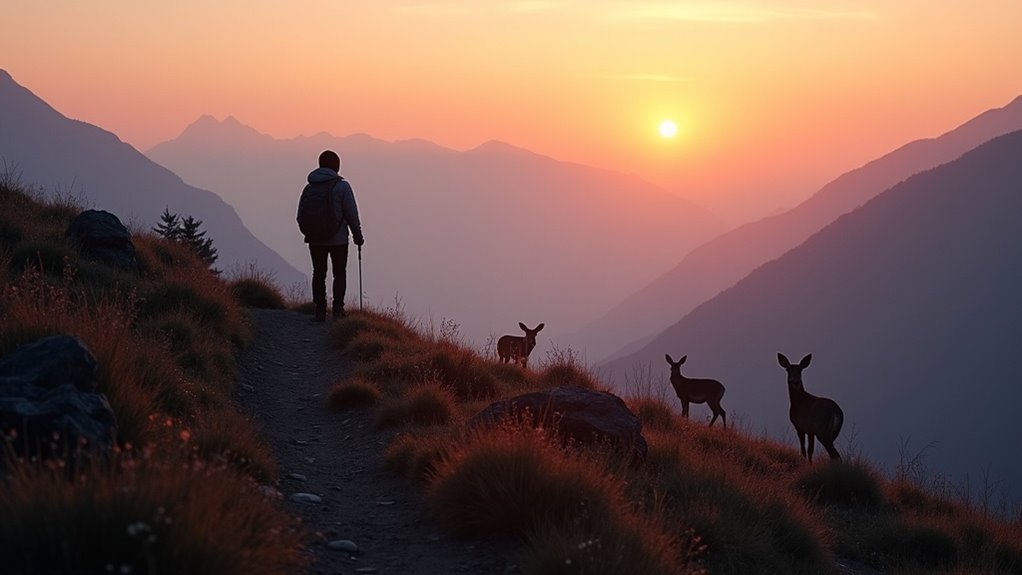
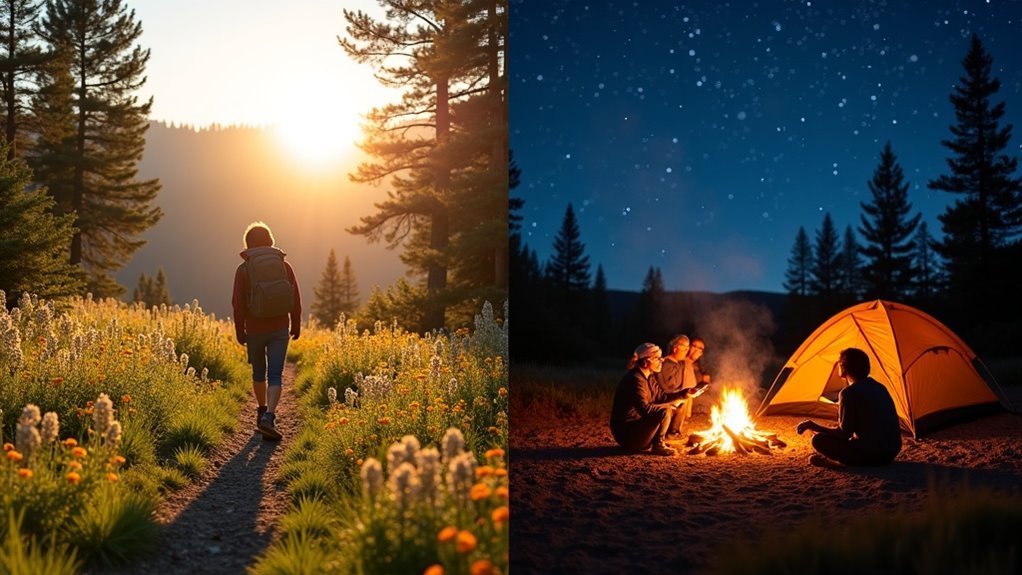
A day hike lets you escape into nature for a few hours without the hassle of overnight gear, making it perfect for quick adventures. You’ll typically cover shorter distances and carry lighter packs, focusing on enjoyment and exploration. In contrast, an overnight hiking trip takes you deeper into the wilderness, requiring more preparation and heavier packs for multiple days. Each offers unique experiences and benefits that can enhance your hiking journey, so there’s much more to discover!
Key Takeaways
- Day hikes involve shorter distances, typically a few to a dozen miles, while overnight hikes cover 8 to 15 miles daily for deeper exploration.
- Day hikes require lighter packs (10-15 lbs) with basic essentials, whereas overnight hikes necessitate heavier packs (40 lbs+) with camping gear and food.
- Day hikes are suitable for all skill levels, while overnight hikes demand higher physical endurance and preparation for navigation and camping.
- Day hikes offer quick nature escapes, while overnight hikes provide immersive experiences in remote areas for solitude and stunning views.
- Both hiking types enhance adventure differently; day hikes promote self-sufficiency, while overnight hikes require more planning and self-reliance.
Understanding Day Hikes
When you think about getting outdoors, a day hike is a fantastic option that allows you to enjoy nature without the commitment of an overnight trip.
Perfect for beginners or those short on time, day hikes typically cover a few to a dozen miles. You’ll carry a lighter pack filled with essentials like water, snacks, and a first-aid kit.
Many trails are conveniently located near populated areas, featuring well-marked paths and facilities. Day hiking is accessible for all skill levels, helping you build confidence and develop your hiking skills while immersing yourself in beautiful surroundings.
Exploring Overnight Hiking Trips
Overnight hiking trips open up a world of adventure that goes beyond the limits of a single day, allowing you to immerse yourself in nature like never before.
Backpacking requires you to carry all essential gear, from shelter to cooking equipment, for multi-day trips filled with stunning views and solitude. You’ll explore remote areas, deepening your connection with the wilderness.
However, these trips demand careful planning and physical endurance, as your pack may weigh over 40 lbs. Embrace the challenge, prepare for varying weather, and experience the joy of camping under the stars, away from the distractions of civilization.
Duration and Distance Comparison
When you opt for a day hike, you can expect to cover a few miles within a single day, perfect for a quick escape into nature.
In contrast, an overnight trip opens up a world of longer distances, allowing you to discover remote areas over several days.
This difference in duration and distance not only shapes your experience but also influences your planning and preparation.
Day Hike Duration
How much time you have for a hike can greatly influence your choice between a day hike and an overnight trip.
Day hikes typically cover shorter distances, usually a few to twelve miles, making them perfect for quick excursions or beginners enthusiastic to enjoy nature. With an average hiking speed of 2.5+ mph, you can complete a day hike in just a few hours, allowing you to return home without the hassle of overnight gear.
In contrast, backpacking trips require more time and planning, as they involve longer distances and the complexities of setting up camp over multiple days.
Overnight Trip Distance
With day hikes offering a taste of adventure, many find themselves intrigued by the allure of overnight trips.
Unlike a day hike, which typically spans a few to 12 miles, multi-day hikes challenge you to cover 8 to 15 miles daily. This extended distance allows for deeper exploration of breathtaking landscapes.
However, these trips require careful planning, as you’ll need camping gear and provisions for at least one night. Be prepared for varying terrains and potential elevation gains that will impact your pace.
Ultimately, embracing an overnight trip opens up a world of adventure beyond a single day’s journey.
Gear Requirements for Each Type
While day hiking and overnight trips both require essential gear, the differences in packing can profoundly impact your experience on the trail.
For day hikes, you’ll need the basics: water, snacks, a first-aid kit, and extra layers, resulting in a lighter pack of around 10-15 lbs.
In contrast, overnight hiking trips demand more extensive gear, including a tent, sleeping bag, cooking equipment, and sufficient food, leading to a pack weight of 40 lbs or more.
Accessibility of Trails
Choosing between day hikes and overnight trips involves not just gear but also how accessible the trails are.
Day hiking trails are often close to populated areas, making them perfect for quick outings. These trails usually feature well-marked paths and facilities like restrooms and parking lots, ensuring ease of access.
In contrast, overnight hikes lead you to more remote locations, requiring additional planning for trail access and camping site availability. You’ll need to evaluate logistics like shuttle services or permits, depending on regulations and trail conditions.
Ultimately, the accessibility of your chosen trail can greatly influence your hiking experience.
Difficulty Levels and Fitness Considerations
When choosing between a day hike and an overnight trip, consider your skill level and physical endurance.
Day hikes cater to everyone, making them perfect for families or beginners, while overnight excursions demand more strength and stamina due to heavier packs and longer distances.
To prepare, focus on building your fitness through regular hikes and strength training, ensuring you’re ready for the challenge ahead.
Skill Levels Required
Hiking can range from a leisurely stroll to a demanding trek, depending on whether you opt for a day hike or an overnight trip.
- Day hikes suit all skill levels, perfect for beginners and families.
- Backpacking requires higher physical endurance and strength due to longer distances and heavier packs.
- Planning for overnight trips involves knowledge of navigation, camping, and weather, while day hikes need minimal preparation.
Ultimately, day hikes offer exploration and flexibility, while backpacking demands physical fitness and mental resilience for an immersive wilderness experience.
Choose your adventure based on your comfort level and readiness for the journey ahead.
Physical Endurance Demands
While day hikes offer a more forgiving physical challenge, overnight hiking trips demand a higher level of endurance and fitness.
You’ll find that day hikes, typically covering a few miles at speeds around 2.5+ mph, are accessible for beginners. In contrast, overnight hiking trips require greater stamina as you carry heavier packs, often exceeding 40 lbs, and tackle longer distances at a slower pace of 1.5-2 mph.
The rugged terrain and multiple days of activity can lead to significant fatigue. To prepare, it’s essential to gradually build your physical endurance, ensuring you can handle the demands of an unforgettable backpacking adventure.
Training Recommendations For Hikers
To commence a successful hiking adventure, it’s essential to tailor your training to match your chosen difficulty level and fitness considerations. Here are some training recommendations:
- For day hikes, walk or hike 2-5 miles regularly.
- For overnight hiking trips, gradually increase distances to 10-15 miles on weekends.
- Incorporate strength training focused on your core, legs, and back.
Monitoring your heart rate during training helps gauge your endurance, aiming for 60-75% of your maximum heart rate.
By following these guidelines, you’ll build the stamina and strength necessary to enjoy your hiking experiences fully.
Happy trails ahead!
Planning Your Hiking Adventure
When you set out to plan your hiking adventure, it’s essential to contemplate whether you’ll commence on a day hike or an overnight trip.
For day hikes, assess the trail’s distance, guaranteeing it aligns with your time and energy. For overnight excursions, pack essential gear like a tent and sleeping bag, plus enough food and water for multiple days.
Familiarize yourself with trail maps and navigation tools to avoid getting lost. Always check the weather conditions beforehand, as this influences your gear choices.
Finally, use a checklist tailored to your hike type to ensure you’re fully prepared for a successful journey.
Benefits of Each Hiking Experience
Choosing between a day hike and an overnight trip can greatly shape your outdoor experience. Each offers unique benefits that cater to different needs and desires.
- Day hikes let you explore local trails with lighter packs and less commitment.
- Overnight trips immerse you in nature, revealing breathtaking sunrises and sunsets.
Engaging in both experiences enhances your adventure, blending convenience and solitude.
Whether you’re seeking a quick escape or a deeper connection with the wilderness, each option enriches your journey.
Embrace the challenges of overnight hikes or enjoy the simplicity of day hikes, and discover the joy of serving yourself in nature.