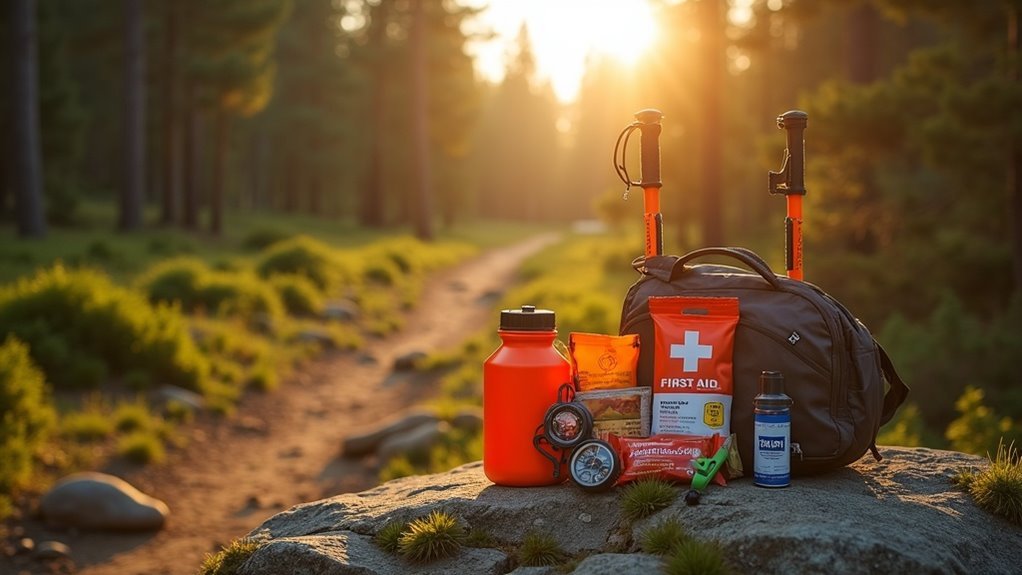
To guarantee your safety on hikes, pack these ten essentials: Navigation tools like maps and a compass, a reliable headlamp, and sun protection gear. Include a first aid kit, a multitool or knife, emergency shelter, extra food, extra water, and additional clothing layers. Each item plays a crucial role in keeping you prepared for unexpected challenges while enjoying the great outdoors. Stay tuned to discover how each tool can enhance your hiking experience even further.
Key Takeaways
- Carry a detailed topographic map and compass for navigation, along with a backup GPS device to ensure you don’t get lost.
- Pack a well-stocked first-aid kit, including bandages, ointment, and pain medication for treating common hiking injuries.
- Include sun protection essentials like broad-spectrum sunscreen, sunglasses, and a wide-brimmed hat to shield against harmful UV rays.
- Prepare for emergencies with lightweight shelter options such as a bivy sack or ultralight tarp for unexpected situations.
- Ensure you have sufficient food and water, packing high-energy snacks and extra hydration to support your hiking journey.
Navigation
When you venture into the great outdoors, having a solid understanding of navigation can make all the difference between a rewarding adventure and a disorienting experience.
Always carry a detailed topographic map and a compass, as these tools are essential when GPS devices fail. Familiarize yourself with the area, noting trails and landmarks, to build confidence.
Always have a topographic map and compass on hand; they’re vital when technology fails. Familiarize yourself with the terrain for added confidence.
Learn to use a compass effectively, converting magnetic north to true north for accuracy. Monitor your GPS device’s battery life, and always have a backup navigation tool.
Practice route planning and reading maps before your hike to tackle any challenges that may arise.
Headlamp
When the sun sets, your headlamp becomes your best friend for nighttime navigation.
It frees up your hands, allowing you to cook, manage gear, or even read a map without fumbling in the dark.
To stay safe, always pack extra batteries and check your headlamp’s functionality before hitting the trail.
Nighttime Navigation Importance
Maneuvering the trails after dark can be intimidating, but a reliable headlamp transforms the experience into a more manageable adventure. This hands-free light source allows you to navigate while keeping both hands free for tasks like holding trekking poles or using your first-aid kit.
When selecting a headlamp, prioritize brightness measured in lumens and lightweight design, especially for long hikes. Familiarizing yourself with its features enhances safety, while extra batteries guarantee you won’t be left in the dark.
Plus, in emergencies, your headlamp can signal for help, proving its versatility essential for nighttime navigation on the trail.
Battery Management Tips
Steering through the trails at night requires more than just a good headlamp; effective battery management plays an essential role in keeping your path illuminated.
Always carry extra batteries to guarantee you’re prepared for any unexpected darkness. Opt for rechargeable batteries—they’re cost-effective and kinder to the environment, but make certain you have a charging plan for longer excursions.
Store your gear in a cool, dry place to enhance battery lifespan. Before hitting the trail, test your headlamp to confirm its brightness.
Additionally, consider a headlamp with a battery indicator to keep track of your power and avoid surprises while guiding.
Sun Protection
When you hit the trails, protecting yourself from the sun is essential for a safe and enjoyable hike.
Don’t forget to apply broad-spectrum sunscreen every two hours, wear sunglasses that block 100% of UVA and UVB rays, and choose sun-protective clothing to keep your skin safe.
A wide-brimmed hat can also be a game-changer, providing extra shade and comfort under the sun.
Sunscreen Application Frequency
Heading out for a hike means embracing the great outdoors, but it also means taking sun protection seriously.
Apply a broad-spectrum sunscreen with at least SPF 30 generously to all exposed skin 15-30 minutes before you head out. For prolonged activities, reapply every two hours, or more often if you’re sweating or swimming.
Don’t forget those often-missed areas like your ears, back of your neck, and tops of your feet. And if you towel off, reapply immediately to maintain that protective layer.
When you’re armed with sunscreen and extra clothing, you’re ready for a safe and enjoyable adventure!
Protective Clothing Options
Sun protection isn’t just about sunscreen; the right clothing can make a significant difference in keeping you safe from harmful UV rays while enjoying your hike.
Opt for sun-protective clothing with a UPF rating to shield your skin while staying comfortable. A wide-brimmed hat adds shade to your face, neck, and ears, which are prone to sunburn.
Don’t forget your sunglasses that block 100% of UVA and UVB rays, especially in bright, high-altitude areas.
If rain threatens, pack breathable rain gear to stay dry. Moisture-wicking fabrics help regulate your temperature, ensuring you’re cool and protected during your outdoor adventure.
Sunglasses and Eye Health
How can you guarantee your eyes stay protected during your hikes? Invest in quality sunglasses that block 100% of UVA and UVB rays. Not only do they shield your eyes from harmful solar radiation, but wraparound styles also minimize light sneaking in from the sides.
If you’re hiking in high-altitude areas or snow, consider glacier glasses for extra glare and UV protection. Remember, prolonged sun exposure can lead to cataracts and macular degeneration, so proper eye protection is essential.
Don’t forget to regularly reapply sunscreen around your eyes, ensuring that sensitive skin remains shielded from UV damage. Your eyes deserve it!
First Aid
When you’re out on the trail, having a well-stocked first-aid kit can make all the difference in ensuring your safety and well-being.
Your kit should include adhesive bandages, gauze pads, disinfecting ointment, and over-the-counter pain medication tailored to your needs. Regularly check and replenish these supplies to keep them current.
Be prepared for common hiking injuries like blisters, sprains, and insect bites. It’s essential to know how to use these supplies effectively.
Consider taking a first aid course to boost your confidence and skills, ensuring you can provide care when it matters most.
Knife and Tools
After verifying you’re prepared for medical emergencies with a solid first aid kit, it’s time to contemplate the tools that can enhance your hiking experience and safety.
Ensure you’re equipped for any hiking adventure by considering essential tools that boost both safety and enjoyment.
A reliable knife or multi-tool is essential for tasks like food preparation, gear repair, and even first aid applications. Each group member should carry one to guarantee tools are readily available.
Opt for a multitool for added versatility, featuring screwdrivers, scissors, and can openers. Don’t forget lightweight repair kits, like duct tape and cordage, for any gear malfunctions on the trail.
Always check your knife’s functionality before heading out to confirm reliability.
Fire
When you’re out in the wilderness, knowing how to start and maintain a fire is essential for your comfort and safety.
Make sure you pack waterproof matches or a reliable lighter, along with fire starters like dry tinder or candles to help you ignite flames even in damp conditions.
Fire-starting Gear Essentials
While exploring the great outdoors, having the right fire-starting gear can mean the difference between a warm meal and a cold, uncomfortable night.
Always carry waterproof matches and a reliable lighter in a watertight container to guarantee you can ignite flames, even in wet conditions. Including fire starters like dry tinder, candles, or compressed wood chips will help you tackle damp wood effectively.
Before your trip, practice your fire-building skills to boost your confidence and preparedness.
Finally, remember to check for any fire restrictions in the area you’re hiking, as regulations can vary and guarantee everyone’s safety.
Building a Reliable Fire
Having the right fire-starting gear sets the stage for successfully building a reliable fire in the wilderness. Carry waterproof matches or a dependable fire starter in a watertight container.
When you’re ready to ignite, choose dry tinder like leaves or grass to spark the flames quickly, even in damp conditions. Create a solid foundation with larger logs or rocks to elevate the fire and minimize spread risks.
Practice techniques like the teepee or log cabin method to guarantee efficiency. Always select a safe spot, away from overhanging branches, and adhere to local fire regulations to protect the environment.
Safety Precautions and Considerations
Before you strike that match or flick the lighter, understanding the essential safety precautions for fire use in the wilderness is crucial. Always carry waterproof matches, a reliable lighter, and fire starters like dry tinder. In areas with fire restrictions, opt for a portable stove to minimize your environmental impact. Familiarize yourself with local fire regulations to prevent wildfires. Practice your fire-building skills before your trip to guarantee quick warmth and cooking. Here’s a quick guide to enhance your fire safety:
| Item | Purpose | Safety Tip |
|---|---|---|
| Waterproof Matches | Reliable ignition | Keep them sealed in a bag |
| Dry Tinder | Quick fire starting | Pack it in a waterproof container |
| Portable Stove | Cooking without firewood | Use in restricted areas |
| Emergency Shelter | Protection from elements | Always keep it accessible |
Emergency Shelter
When you’re out on a hike, having an emergency shelter can be a game changer, especially in unpredictable weather.
Lightweight options like ultralight tarps, bivy sacks, and space blankets are easy to carry and deploy when you need protection from sudden storms or injuries. Familiarizing yourself with the setup procedures guarantees you can act quickly in a crisis.
Lightweight emergency shelters like tarps and bivy sacks ensure quick protection during unexpected weather or injuries.
Choose a shelter suitable for the expected conditions, considering temperature and wind. To keep your emergency shelter functional, store it in a waterproof bag, safeguarding it from moisture.
This preparation can make all the difference in securing safety during unexpected situations.
Extra Food
Packing extra food for your hike is essential—aim for at least one day’s worth of high-energy, non-perishable snacks. Choose lightweight options like energy bars, nuts, dried fruits, and jerky that don’t require cooking.
These snacks not only satisfy hunger but also keep energy levels up, preventing fatigue on the trail. Remember to evaluate dietary restrictions and preferences, ensuring everyone in your group has suitable options.
Additionally, pack some less desirable emergency food for unexpected situations. By planning ahead and packing wisely, you’ll be prepared for extra days worth of challenges, making your hike safer and more enjoyable for all.
Extra Water
Staying hydrated is essential for a successful hike, and it’s easy to overlook just how much water you’ll need on the trail. Aim for at least half a liter per hour, but always pack extra water for emergencies. Consider potential water sources and carry a reliable water filter to purify any collected water. Monitor your intake based on conditions, and use collapsible reservoirs or extra bottles to manage your supply easily.
| Hiking Duration | Minimum Water (liters) | Recommended Extra Water (liters) |
|---|---|---|
| 1 hour | 0.5 | 1 |
| 4 hours | 2 | 2 |
| 8 hours | 4 | 3 |
| Full day | 8 | 4 |
Extra Clothes
Having extra clothes on hand can make a world of difference during your hike, especially when unexpected weather changes occur.
Packable clothing, like moisture-wicking base layers and insulating mid-layers, guarantees you’re prepared for varying temperatures.
Don’t forget extra socks; they’re vital for maintaining comfort and hygiene, particularly on multi-day hikes. A warm hat and gloves can safeguard against chilling winds.
Remember to take into account the specific conditions of your hiking area, as altitude and climate can shift rapidly.