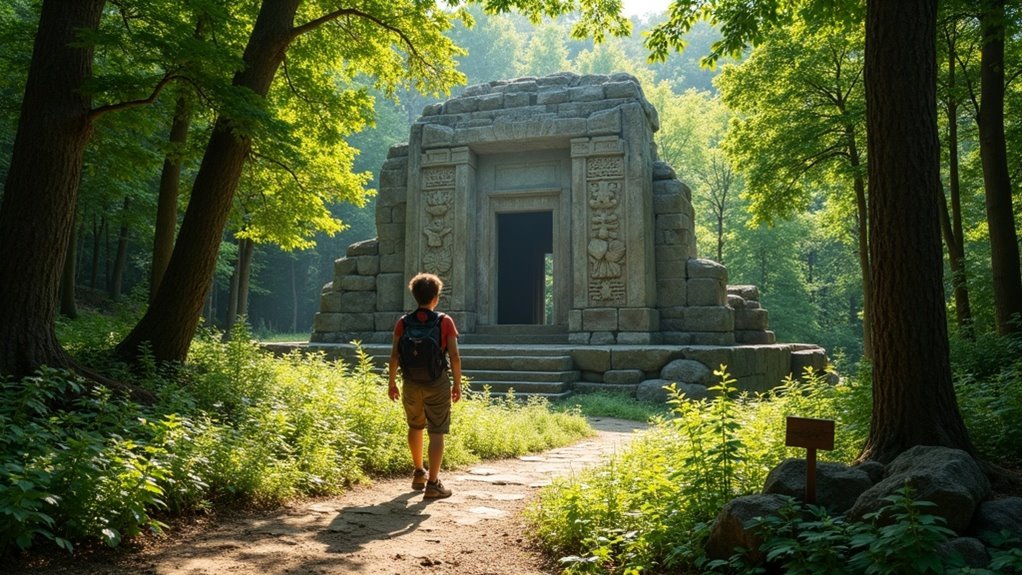
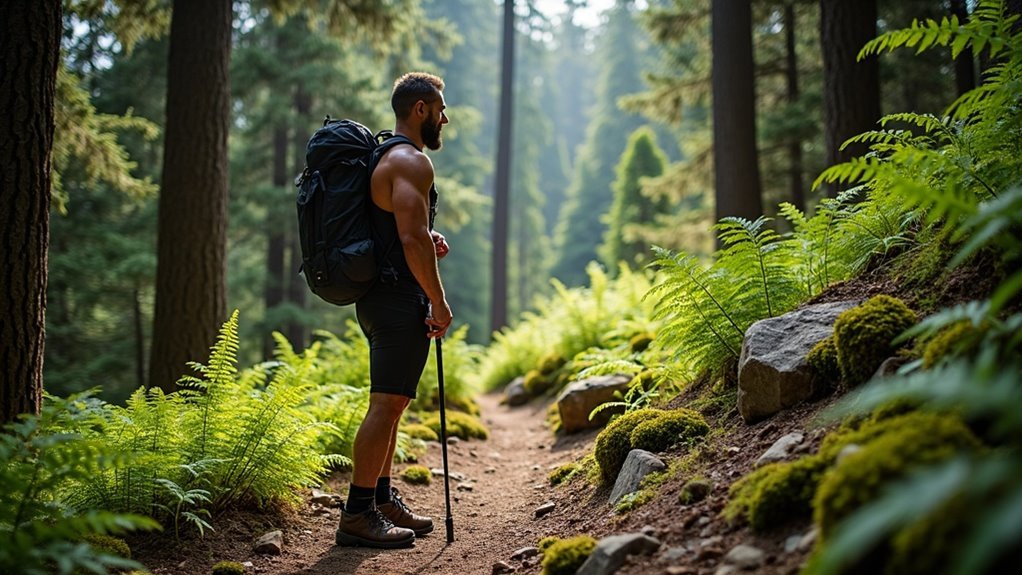
Hiking can definitely build muscle! As you climb uphill, your glutes and quads work hard, while your hamstrings and calves are engaged too, especially on descents. Plus, traversing varied terrain challenges your core, enhancing stability and strength. If you add a weighted pack, you’ll increase resistance, promoting even more muscle growth. So, lace up your boots and hit the trails—there’s plenty more to discover about how hiking can transform your fitness journey!
Key Takeaways
- Hiking engages major lower body muscles, including glutes, quads, hamstrings, and calves, promoting muscle growth and endurance.
- Uphill hiking specifically targets the gluteus maximus, while downhill hiking strengthens the quadriceps, enhancing overall muscle development.
- Incorporating a weighted pack during hikes increases resistance, further promoting muscle growth and improving strength.
- Varied terrain challenges stabilizing muscles in hips and ankles, contributing to improved balance and coordination.
- Consistent hiking enhances core stability, which supports overall physical health and reduces injury risk during outdoor activities.
Understanding Muscle Engagement During Hiking
When you hit the trails, you’re not just enjoying nature; you’re also engaging a powerful array of muscles that can boost your fitness levels.
Hiking primarily targets your lower body, activating glutes, quads, hamstrings, hip flexors, and calves as you navigate uneven terrain. Uphill hiking challenges your gluteus maximus, while downhill hiking strengthens your quadriceps through eccentric contractions, preventing knee buckling.
Incorporating a weighted pack increases resistance, promoting muscle growth akin to strength training. Plus, stabilizing muscles in your hips and ankles work hard to maintain balance, making every hike a rewarding experience for both body and spirit.
Key Muscle Groups Targeted While Hiking
When you hit the trails, your major lower body muscles spring into action, powering each step and keeping you stable on uneven terrain.
You’ll engage your glutes, quads, hamstrings, and calves, all crucial for a strong hike.
Plus, don’t forget about your core; it plays an important role in maintaining balance and stability as you navigate those challenging paths!
Major Lower Body Muscles
As you commence on a hiking adventure, you’ll discover that your lower body muscles are put to the test, engaging key groups that power your journey through diverse terrains.
Your glutes propel you uphill, while your quads provide essential stability, preventing knee buckling on descents. The hamstrings support your movements, facilitating smooth shifts between steps.
Hip flexors come into play as you lift your legs over obstacles, enhancing your stride length. Meanwhile, your calves work tirelessly to support every step, contributing to your overall strength and stability.
Embrace this opportunity to build muscle and enjoy the beauty of nature!
Core Stability Engagement
While you traverse the trails, your core muscles play a vital role in keeping you balanced and stable on unpredictable terrain. Engaging your rectus abdominis, obliques, and transverse abdominis enhances your muscle strength and stability, essential for maneuvering obstacles.
Uphill climbs demand even more core activation, boosting endurance and overall performance. As you descend, your core controls movement, maintaining posture and preventing injury.
This consistent engagement not only reduces the risk of lower back injuries but also strengthens your upper body. By prioritizing core stability during hiking, you’re investing in your physical health and enhancing your ability to serve others.
The Benefits of Varied Terrain
Hiking on varied terrain can greatly enhance your fitness routine by engaging a broader range of muscle groups than flat walking.
You’ll challenge your stabilizing muscles in your hips and ankles, improving balance and coordination while minimizing injury risk. Uphill hiking strengthens your hip and glute muscles, while downhill hiking targets your quadriceps, providing an extensive lower body workout.
This elevation gain not only boosts cardiovascular fitness but also enhances muscular endurance.
Ultimately, hiking on varied terrain offers significant health benefits, contributing to improved overall fitness.
Incorporating Strength Training With Hiking
To effectively build muscle and enhance your hiking experience, it’s essential to incorporate strength training into your routine.
Focus on lower body workouts that target your glutes, quads, hamstrings, and calves at least twice a week. Exercises like squats, lunges, and stair climbing will complement your hiking sessions.
Remember, uphill hiking with a weighted backpack can mimic strength training, increasing resistance and stimulating muscle growth.
Balancing aerobic and strength exercises through concurrent training guarantees you maximize gains without compromising performance.
Plan your workouts strategically to support recovery and muscle growth, enhancing your overall hiking muscles and experience.
Tips for Preventing Hiking Injuries
Injuries can easily turn an enjoyable hike into a painful setback, but with the right precautions, you can keep your adventures safe and fulfilling.
Here are some tips to help you prevent injuries:
- Gradually increase hiking distance and difficulty
- Strengthen gluteal muscles to prevent tendon injuries
- Use proper footwear and trekking poles for support
- Incorporate balance exercises to enhance stability
- Consult a doctor before hiking after a long break
Enhancing Your Hiking Experience With Proper Preparation
Preparing for a hike goes beyond just selecting a trail; it’s about setting yourself up for success and enjoyment on the journey ahead. Proper preparation includes gradually increasing workout intensity and incorporating muscle-strengthening exercises like squats and lunges to enhance leg strength.
Start with daily walks on level ground to build endurance, easing into hiking demands. Choose easier trails initially to reduce injury risk. Confirm you have appropriate footwear and gear for comfort and performance.
Stay hydrated and prioritize nutrition before and during hikes to sustain energy levels. With these steps, you’ll enhance your hiking experience and build muscle effectively.